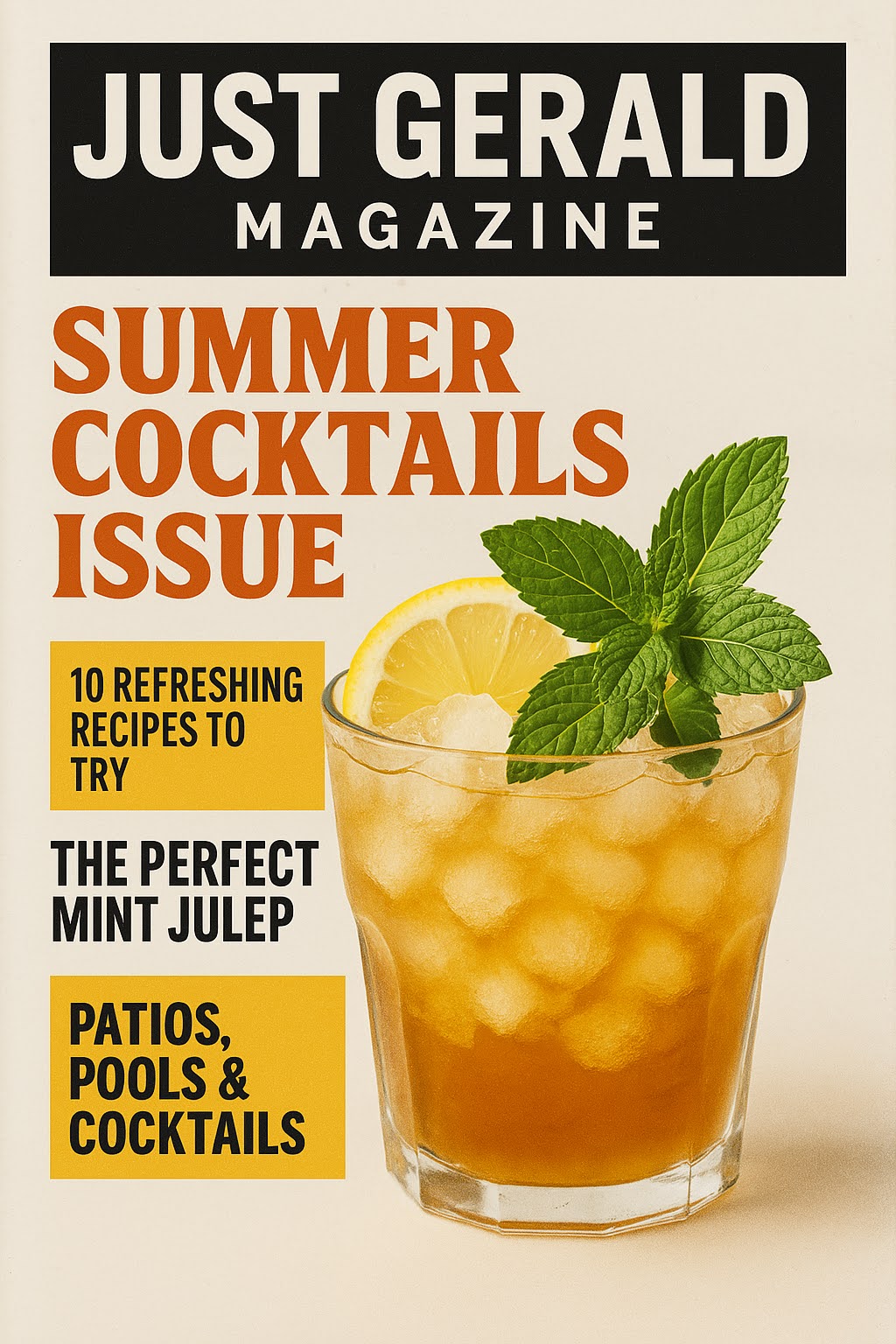
THE HISTORY OF THE MINT JULEP
From a Virginia plantation to the Kentucky Derby — the story of the most misunderstood cocktail in American history.
Field Notes
The mint julep has been ruined more times than almost any other cocktail. It has been over-sweetened, under-iced, served in the wrong vessel, made with the wrong bourbon, and — perhaps most unforgivably — garnished with a plastic sprig of fake mint by people who should have known better. And yet it survives. More than survives: it thrives, selling approximately 120,000 units over the two days of the Kentucky Derby each year, consumed by people in extraordinary hats who may or may not know what they're drinking. This is its story.
01
THE ORIGINS: OLDER THAN YOU THINK
The julep — from the Persian word gulab, meaning rosewater — predates the mint julep by centuries. The word arrived in English via Arabic and referred to a medicinal syrup, a sweetened liquid used to make bitter medicines more palatable. By the time it reached the American colonies in the 18th century, it had evolved into something closer to what we'd recognize today: a sweetened, spirit-based drink, often consumed in the morning as a kind of medicinal tonic.
The earliest American references to the mint julep appear in the late 1700s, primarily in Virginia and Maryland. John Davis, an English traveller writing in 1803, described Virginians drinking mint julep in the morning — a habit he found both charming and alarming. The spirit at this point was often brandy or rye whiskey; bourbon, which would become the canonical spirit, was not yet the dominant American whiskey it would later become.
The shift to bourbon happened gradually through the early 19th century, as Kentucky's distilling industry grew and bourbon became the American whiskey of choice. By the 1830s, the mint julep was firmly associated with the South, with bourbon, and with a particular kind of genteel hospitality that involved silver cups, crushed ice, and the careful bruising of fresh mint.
"The julep predates the mint julep by centuries — a medicinal syrup that became, over time, the most iconic cocktail in American history."
ADVERTISEMENT
JUST GERALD MAGAZINE
Coffee 'til Cocktails — Bottled and Bound
02
THE SILVER CUP DEBATE
The vessel matters. This is not aesthetics — it's thermodynamics. A silver or pewter cup conducts cold in a way that glass does not, which means the exterior of the cup frosts over as the ice inside chills the drink, creating a layer of condensation that keeps your hand from warming the contents. The effect is both functional and beautiful: a properly made mint julep in a silver cup, with crushed ice mounded above the rim and a bouquet of fresh mint standing at attention, is one of the more visually compelling drinks in the canon.
The debate over the cup has been ongoing since at least the 1830s. Senator Henry Clay of Kentucky — a man who took his juleps seriously enough to be remembered for them — was said to prefer a silver cup. The Pendennis Club in Louisville, which claims credit for several classic cocktails, served theirs in silver. The Kentucky Derby adopted the silver cup as its official vessel in 1938, and the tradition has held ever since.
The alternative — a glass julep cup — has its advocates, primarily among people who want to see the drink. This is a reasonable position. It is also wrong. The silver cup is correct.
"A properly made mint julep in a silver cup, with crushed ice mounded above the rim, is one of the more visually compelling drinks in the canon."
JUST GERALD SAYS
03
THE MINT QUESTION
The mint julep is not a muddled drink. This is the most common mistake, and it produces a bitter, over-extracted result that tastes like lawn clippings dissolved in bourbon. The correct technique is to gently press — not crush, not grind, not pulverize — the mint against the side of the cup with the back of a spoon, releasing the aromatic oils without tearing the leaves. The difference in the final drink is significant.
The mint should be fresh, and it should be spearmint rather than peppermint — spearmint is sweeter, less aggressive, and more complementary to bourbon. The garnish should be a generous bouquet of fresh mint, placed so that the drinker's nose is in the mint as they drink — the aroma is half the experience.
The simple syrup should be made with equal parts sugar and water, dissolved cold or warm, and used sparingly. The julep should taste like bourbon with mint, not sugar with bourbon and mint. This distinction matters more than any other in the recipe.
JUST GERALD SAYS
04
THE BOURBON
The bourbon matters, and the conventional wisdom — that you should use a mid-shelf bourbon because the mint and sugar will overwhelm a fine spirit — is wrong. A better bourbon makes a better julep. The nuances of a well-made Kentucky straight bourbon — the vanilla, the caramel, the oak, the proof — come through even with mint and sugar, and they elevate the drink rather than disappearing into it.
The classic choice is Woodford Reserve, which has been the official bourbon of the Kentucky Derby since 1999. It's a good choice: balanced, approachable, and available everywhere. But the serious julep drinker might explore Blanton's Single Barrel, which brings a more complex profile, or a high-rye bourbon like Old Forester 1920, which adds a spicy backbone that cuts through the sweetness in a satisfying way.
The proof should be at least 90. Lower-proof bourbons produce a julep that tastes diluted as the ice melts. The drink is supposed to evolve as you consume it — starting strong, becoming more integrated as the ice does its work — and that evolution requires a bourbon with enough character to sustain it.
"The conventional wisdom — that you should use a mid-shelf bourbon because the mint and sugar will overwhelm it — is wrong."
JUST GERALD SAYS
05
THE JUST GERALD MINT JULEP
This is the recipe we've settled on after considerable research and a number of afternoons that ended earlier than planned:
In a silver julep cup, place 8–10 fresh spearmint leaves. Add 15ml of simple syrup (1:1 sugar to water). Gently press the mint with the back of a bar spoon — do not muddle. Fill the cup with crushed ice, mounding it above the rim. Pour 60ml of your chosen bourbon over the ice. Stir briefly to integrate. Add more crushed ice to maintain the mound. Garnish with a generous bouquet of fresh spearmint, placed so the stems are in the drink and the leaves are above the rim. Add a short straw so the drinker's nose is in the mint. Serve immediately.
Drink slowly. The julep improves as the ice melts and the flavours integrate. The second one is better than the first. The third one is inadvisable but inevitable.
"The second one is better than the first. The third one is inadvisable but inevitable."
JUST GERALD SAYS
THE VERDICT
The mint julep is not a complicated drink. It is a drink that rewards attention — to the vessel, the mint, the bourbon, and the ice. Get those four things right and you have one of the great cocktails. Get them wrong and you have a sweet bourbon slushie. The difference is worth caring about.