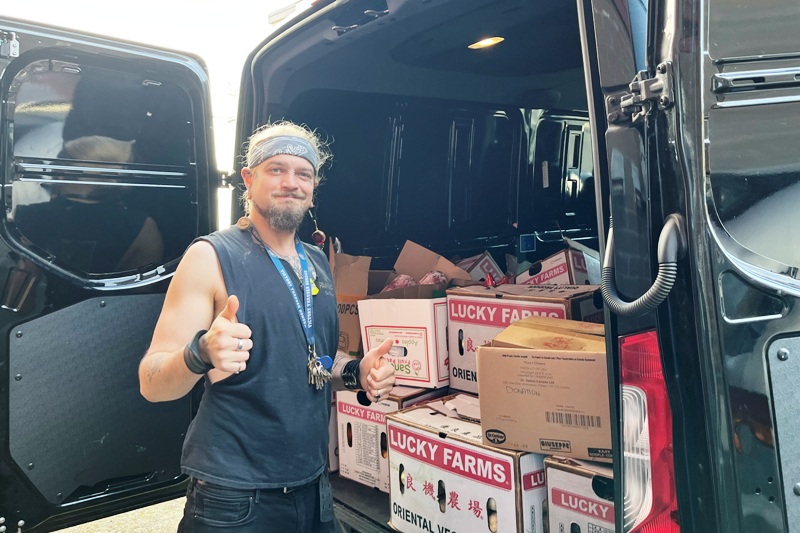
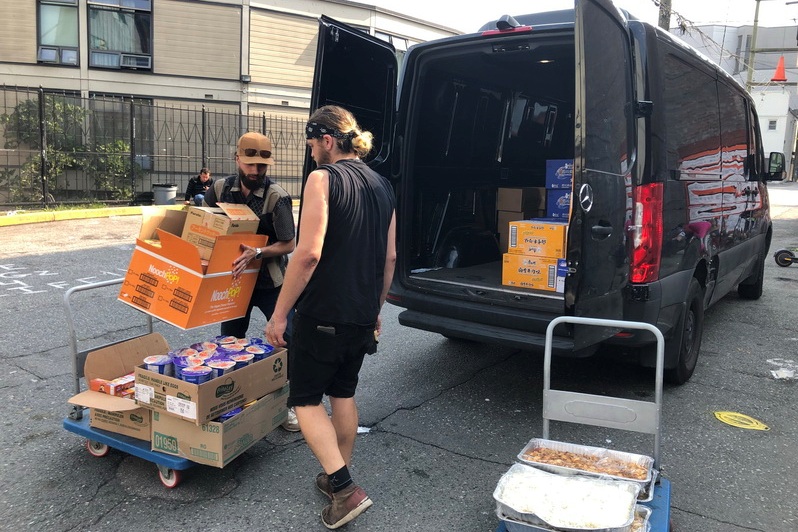
There are places in a city that do the work nobody talks about. Not because the work is shameful — quite the opposite. Because the people doing it are too busy to stop and explain it to you. The DTES Emergency Supply Hub at 140 East Hastings is one of those places.
The Downtown Eastside is one of the most complex urban neighbourhoods in North America. That is not a polite way of saying anything. It is simply true. The density of need, the concentration of frontline organizations, the layered crises of housing, addiction, and poverty — all of it converges on a few blocks of East Hastings Street. Into that environment, Evan Reeks built a warehouse operation that redistributes food, emergency supplies, and essential goods to the organizations and individuals who need them most. He calls it the Hub. The numbers call it something else entirely.
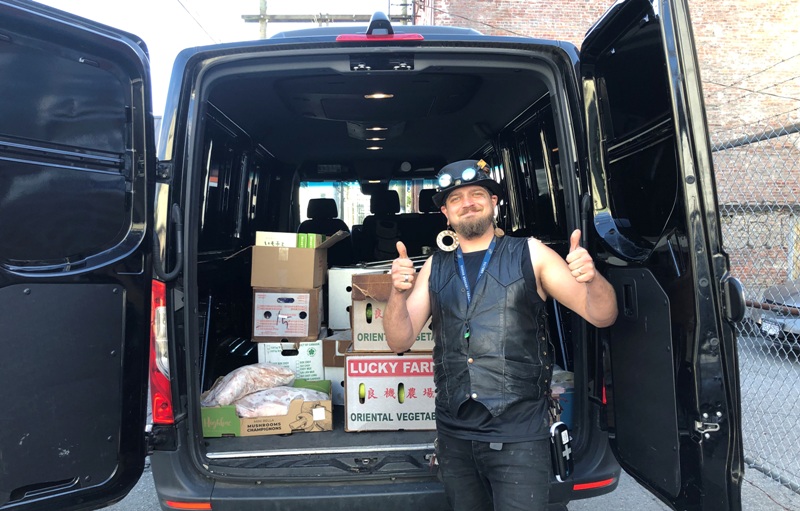
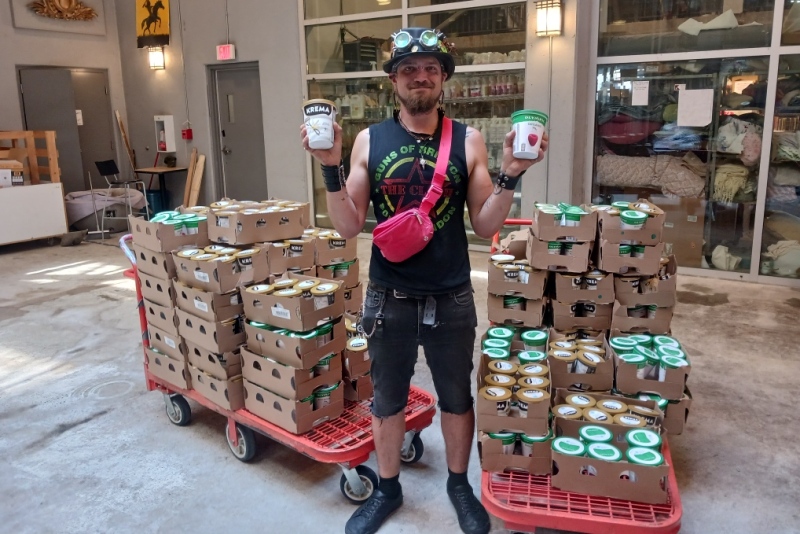
In January 2026 alone, the Hub redistributed 90,860 pounds of food. That is not a typo. It supported 1,000 individuals through food and supply programs, served 4,200 meals through community meal programs, and cooked 1,200 more street-side by volunteers. Three hundred and fifty families receive ongoing support. Seventeen dedicated volunteers make it happen. The kettle stays on.
I went to see it for myself. What I found was a warehouse that smelled like cardboard and oranges, a man who moves through it with the quiet authority of someone who has been doing this long enough to know exactly what needs to happen next, and a philosophy that I have not been able to stop thinking about since.
Evan Reeks — Operations Manager
"Community care is built together. Collaboration over competition."
— Evan Reeks, Operations Manager
Evan Reeks signs every newsletter with that line. It is not a slogan. It is an operating principle. The Hub works because it does not compete with the organizations it serves — it amplifies them.
The Operation
The Hub is not a food bank in the traditional sense. It is a redistribution engine. Food arrives — fresh, frozen, and shelf-stable — from community partners, corporate donors, and surplus sources. It is sorted, organized, and sent back out to nonprofits, shelters, hamper programs, and community meal operations across the neighbourhood and beyond. The Hub is the connective tissue between surplus and need.
The zero-waste commitment is not incidental. From an average of 30,000 kilograms of food donations each month, only about eight percent becomes waste. The rest is redistributed or composted in partnership with the V6A Community Garden, where it returns to the soil and eventually to the table. All cardboard goes to Emterra Environmental for recycling at scale. The Hub thinks in loops, not lines.
The reach extends beyond Vancouver. In recent months, the Hub has assisted The People's Pantry in Port Moody, Hope Omid Food Bank in New Westminster, and community efforts in Hope, BC. When a volunteer's car leaves the Hub filled to capacity for families they support in their own community, that is the Hub's philosophy made physical. Neighbours helping neighbours, week after week.
The Hub does not stop at food. Emergency supplies — weather gear, PPE, first-aid basics, harm-reduction supports — move through the same system. Non-food essentials: toiletries, hygiene products, household basics. Fabric donations — cotton, fleece — go to community sewing groups and independent makers. The Hub has become a kind of community clearinghouse, a place where surplus of any kind finds its way to someone who needs it.
The recovery navigation program is something else again. Working alongside Vancouver Coastal Health, Into Action Recovery, and Together We Can, the Hub's recovery team introduces, invites, and supports people through every stage of the process — from detox and sobriety to long-term recovery and sustainability. The space is non-judgmental, non-committal, and grounded in respect. People can ask questions, explore options, and make informed decisions at their own pace. Once a month, the Into Action team joins the Hub on Hastings Street, distributing food directly to the community. That is what collaboration looks like in practice.
Evan also runs a TikTok series called Let's Talk Recovery — a volunteer in recovery sharing their lived experience, answering questions, inviting people into an honest conversation without judgement. Weekly live sessions. Recordings available for those who cannot attend. It is the kind of thing that sounds simple and is, in fact, extraordinarily difficult to do well. They do it well.
What This Neighbourhood Deserves
The Downtown Eastside has been written about in every register — crisis, tragedy, resilience, renewal. What is harder to write about is the quiet, consistent, unglamorous work of keeping the infrastructure of care running. The Hub is that infrastructure. It is not a headline. It is the thing that makes the headlines possible — or, better, the thing that makes them unnecessary.
Evan Reeks is not a social media personality, though he uses social media effectively. He is not a politician or a philanthropist or a keynote speaker. He is an operations manager who shows up every day, moves food, builds relationships, and signs his newsletters with a line that deserves to be on the wall of every community organization in the country: collaboration over competition.
The Hub is situated on the unceded traditional territories of the xʷməθkʷəy̓əm (Musqueam), Sḵwx̱wú7mesh (Squamish), and səlilwətaɬ (Tsleil-Waututh) Nations. That acknowledgement is not a formality at the Hub. It is a reminder of the kind of care that has always existed on this land, and the kind of care that the Hub is trying to honour.
1,200 meals cooked street-side by volunteers · January 2026
The most important warehouse on East Hastings Street. Run by one of the most quietly remarkable people in Vancouver.
Community Impact
Operational Efficiency
Zero-Waste Commitment
The Evan Reeks Factor
Best Day in the DTES
I left the Hub with a cup of coffee that someone handed me without being asked and a feeling I have not been able to name precisely. Not inspiration — that word is too easy. Something more like recalibration. A reminder that the city works because of people like Evan Reeks, doing work that does not require an audience, in a building that does not require a view.
If you want to help, you can volunteer. If you have surplus food, corporate overstock, or fabric, you can donate. If you know an organization that needs a reliable supply partner, you can collaborate. The Hub's door is open. The kettle is on. And Evan will be there, clipboard in hand, making sure the numbers add up.