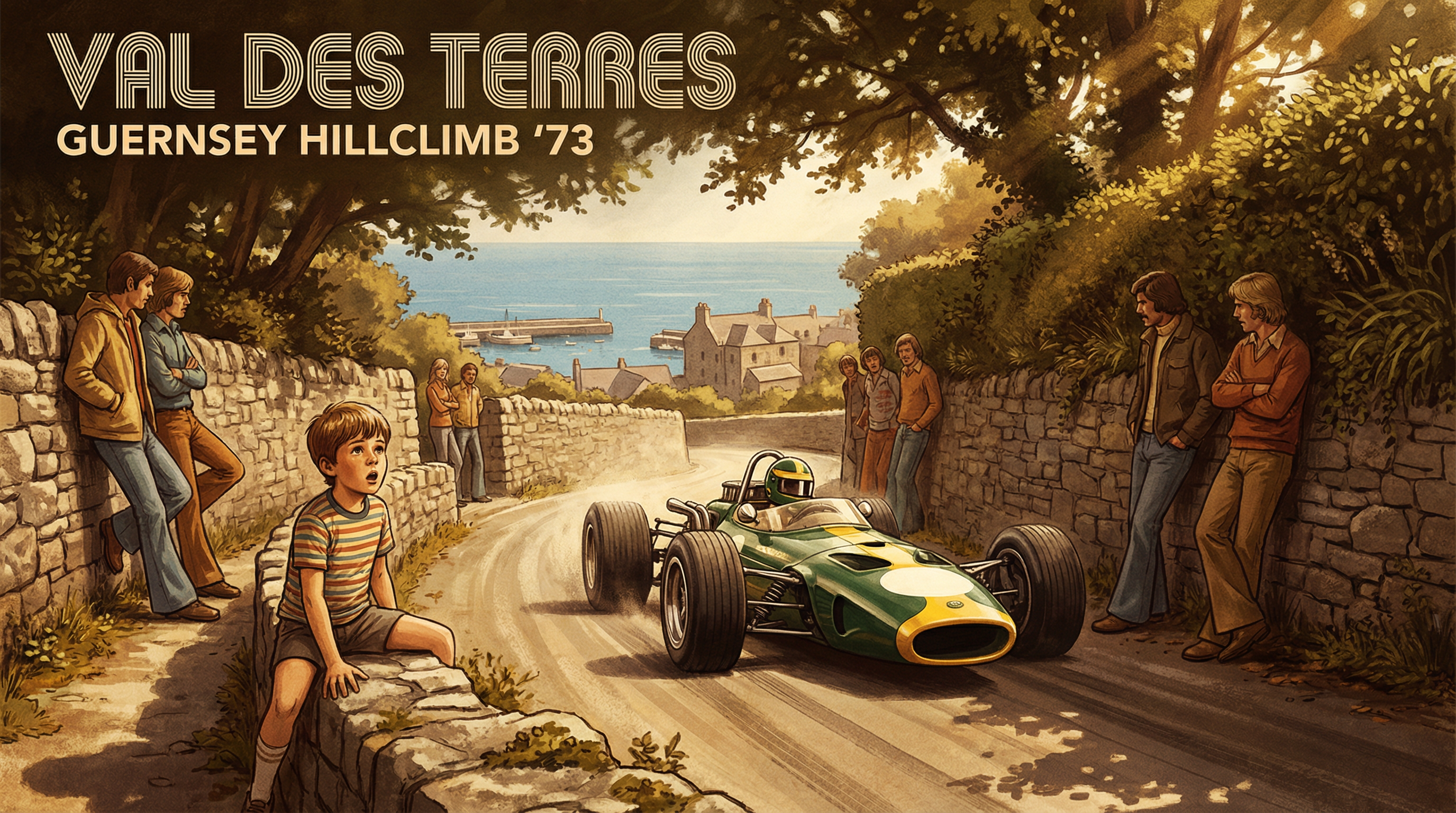
There are days that don't announce themselves. They arrive quietly, smell of something you can't quite name, and then spend the rest of your life refusing to leave.
I was a boy the first time I stood at the bottom of the Val des Terres. The hill starts right there on the South Esplanade — the sea at your back, the ferry terminal to your left, and ahead of you a narrow strip of closed road that climbs steeply into the trees and disappears. On a normal day it is simply the road out of St Peter Port, used by locals and tourists in equal measure. On hill climb day, it becomes something else entirely.
The smell reached you before the cars did. Not just the sharp bite of racing fuel and hot rubber — though that was there, unmistakably — but underneath it the deeper, older smell of Guernsey itself. The brewery on the edge of town, Randalls or Brouard depending on which way the wind was blowing, that warm malt-and-hops drift that seemed to belong to the island the way granite belongs to its walls. And somewhere in the morning, before the engines started, you might still hear the horses. The heavy clop of Shires on cobblestone, hauling their loads through the old town, a sound that felt like it had been there forever and would be there long after the racing cars had gone home.
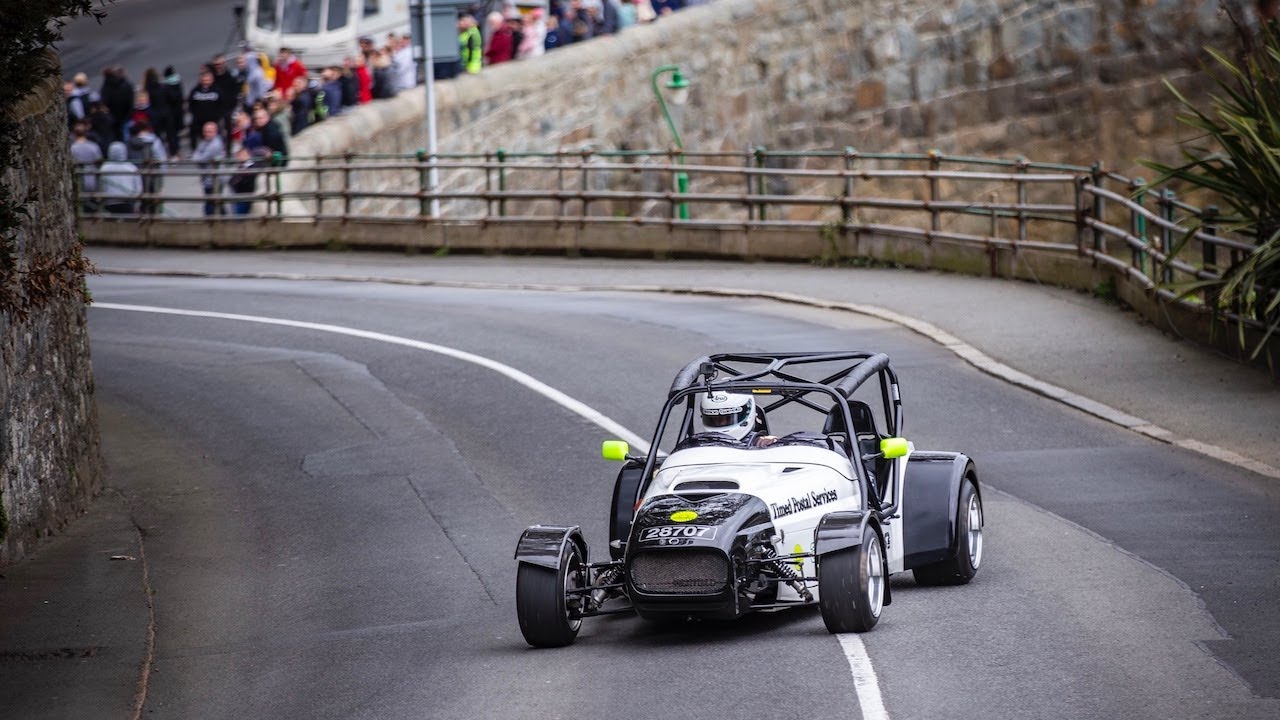
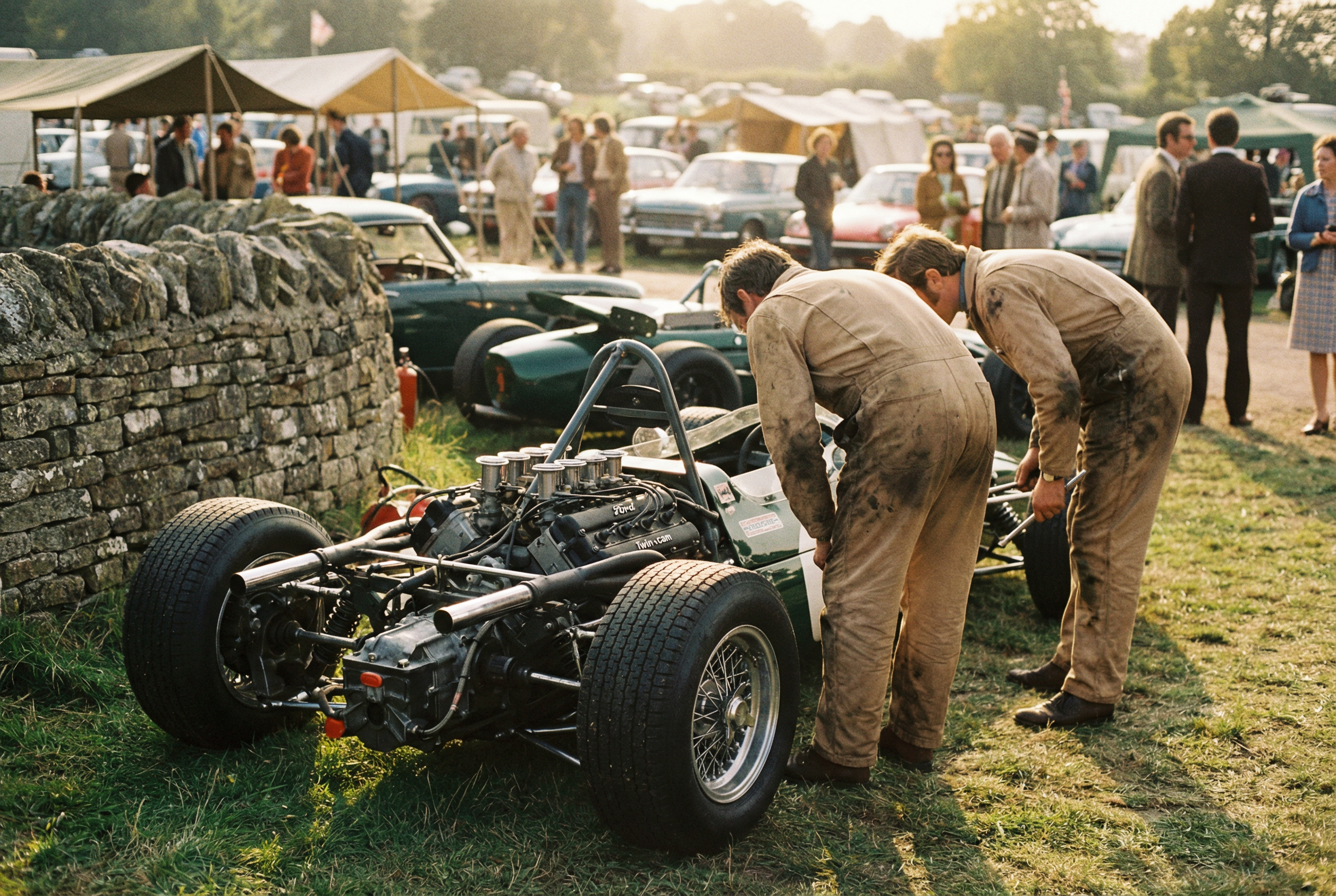
The Val des Terres Hill Climb had been running since 1946, when George Bainbridge pointed an E.R.A. at the hill and the whole island came out to watch. By the time I was there it had become a round of the British Hill Climb Championship — proper national competition on a closed public road 850 yards long, starting at sea level and ending somewhere in the trees above the town. The course record in those years was being chipped away at by men in Pilbeams and Brabhams, single-seaters that looked nothing like anything you'd see on the road, their exhausts barking off the granite walls with a sound that went straight through your chest.
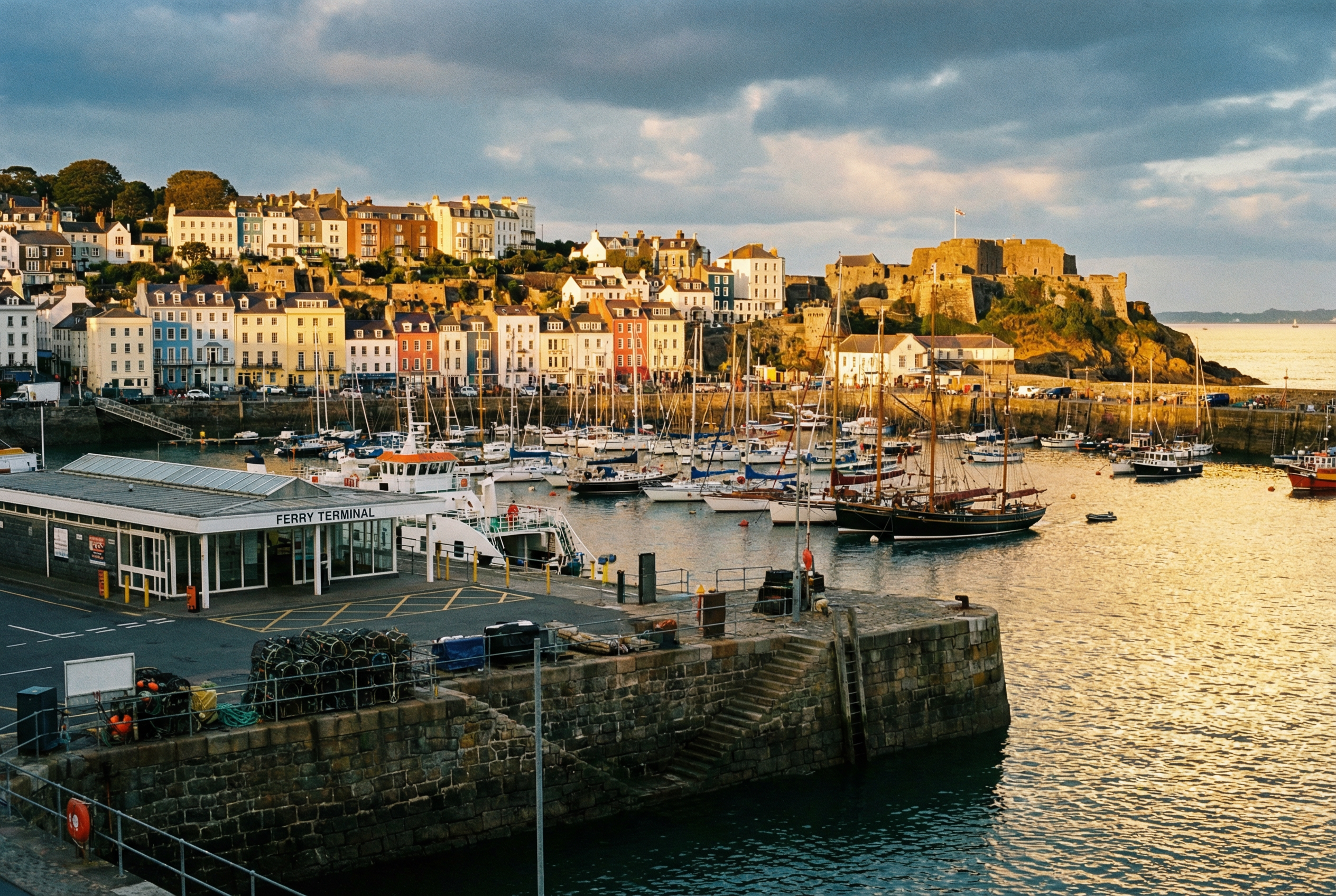
St Peter Port
"The start line was right there on the seafront. The sea behind you. The hill ahead. Eight hundred and fifty yards to the top."
Castle Cornet has watched over St Peter Port harbour since the thirteenth century. From the White Rock lighthouse at the end of its pier, you could see the whole town climbing the hillside — and somewhere up in those trees, the road that became a racetrack once a year.
The Men at the End of the Pier
When the racing was done — or sometimes in the mornings before it started — I would walk out to the lighthouse at the end of the Castle Cornet pier. The White Rock. There were always men there, older men mostly, with rods and patience and a particular kind of quiet that you only find in people who have been fishing the same water for forty years. They fished for bass and mullet in the main, working the tidal runs around the castle walls, but a boy with time on his hands and a willingness to listen could learn a great deal about pike in those conversations.
They were generous with their knowledge in the way that men of that generation often were — not effusively, not with any great ceremony, but steadily, as if passing something along was simply what you did. They showed you how to read the water. How the colour changed over the reef. Where the fish held on an incoming tide versus an outgoing one. They told you things about the island that you wouldn't find in any guidebook, and they asked you almost nothing in return except that you pay attention and don't make too much noise.
I think about those men more than I think about the racing cars, if I'm honest. The cars were spectacular — the crack of an exhaust bouncing off a granite wall is not something you forget — but the men at the end of the pier gave me something that has lasted longer. A certain quality of attention. The understanding that the best things are usually happening quietly, just off to one side of wherever everyone else is looking.
The Hill & The Cars

— Advertisement —
Eight Hundred and Fifty Yards
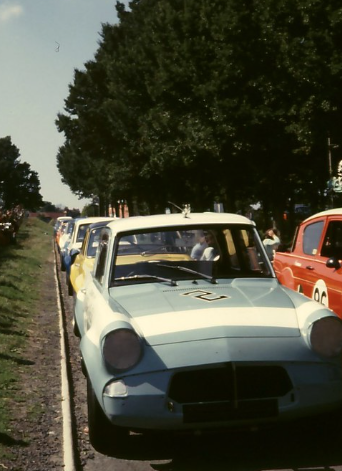
The cars that ran at Val des Terres in those years were not the sort of thing you saw at Silverstone. They were club racers — Ford Anglias and Escorts, Hillman Imps, Minis with their engines singing at the top of their range, the occasional Ginetta or Marcos that some enthusiast had built in a garage over a winter. They were driven by men who had day jobs and raced on weekends, who transported their cars on trailers and worked on them themselves, and who knew every inch of that 850-yard strip of road the way a farmer knows his own fields.
The British Hill Climb Championship brought a different class of machine — proper single-seaters, purpose-built hillclimb specials with names like Pilbeam and Gould, driven by men who were genuinely fast by any measure. The Priaulx family were the island's own: Graham Priaulx had a restaurant practically on the start line and his son Andy would go on to win the World Touring Car Championship three times, cutting his teeth on this same narrow road. But even the championship cars felt accessible in a way that circuit racing never quite did. There was no grandstand between you and the action. You stood on a stone wall, or pressed yourself against a hedge, and the cars went past close enough to feel the air move.
The course involves, at one point, running over the pavement — the footpath — to find the quickest line. It is that kind of event. Improvised, intimate, completely real. The road is the road. The walls are the walls. There is no run-off, no tyre barrier, no margin for error. Just a driver, a car, and a hill.
The Island
A Place That Stays With You
Guernsey is a small island — twenty-four square miles, roughly — but it carries itself with the confidence of somewhere much larger. The light is different there. Something to do with the latitude and the sea on all sides, the way the afternoon sun catches the harbour water and throws it back against the old stone of Castle Cornet. The food is serious. The people are private in the way that island people often are, but generous once you've earned a little trust.
I visited several times as a boy, and each time the island gave me something I hadn't known I needed. The hill climb. The men at the end of the pier. The brewery smell drifting through the morning. The particular quality of silence on a Guernsey lane when the hedgerows are high and the road is empty and you have nowhere to be until the afternoon.
These are the days that don't announce themselves. The ones you don't recognise until later, when you're somewhere else entirely and a smell or a sound brings them back whole, and you realise that what you thought was just a summer holiday was actually one of the best days of your life.
Swipe!
A Guernsey Thriller
GERALD J. SHAFFER
From the Author
Swipe! — A Guernsey Thriller
The island that gave us the hill climb, the brewery smell, and the men at the end of Castle Cornet pier also gave Gerald Shaffer the setting for his debut thriller. Swipe! is set in the lanes and harbours of Guernsey — a story of identity theft, island secrets, and the particular kind of trouble that finds you when you think you're somewhere safe.
Available now on Kindle. If you know Guernsey, you'll recognise every corner of it.
READ ON KINDLE →FULL FEATURE →— Advertisement —
Gerald's Verdict
Val des Terres Hill Climb
I still hear it sometimes. The crack of an exhaust off a granite wall. The clop of a horse on cobblestone. An old man's voice telling me to watch the water, not the float.
Val des Terres. Guernsey. Best Day Ever.
— Gerald