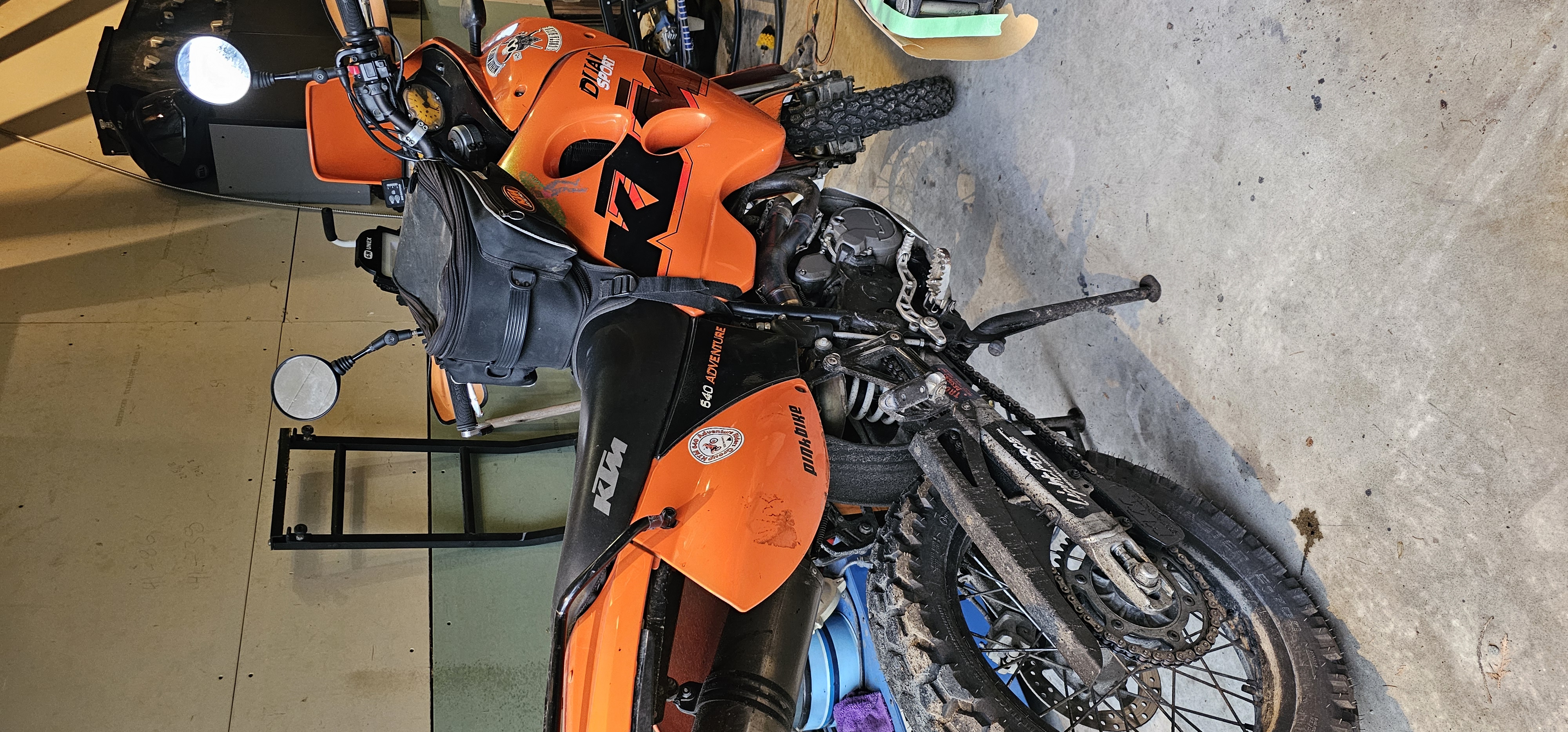
There is a moment, somewhere on a fire road in the middle of nowhere, when the engine note of a KTM 640 LC4 settles into a rhythm that is unlike anything else on two wheels. It is not smooth. It is not quiet. It thumps. It vibrates. It demands your attention. And then it pulls — hard, low, and honest — and you understand exactly why this motorcycle became the foundation of an empire.
The KTM 640 LC4 was never the easiest motorcycle to live with. It was never the most refined, the most comfortable, or the most reliable. But it was, without question, the most important single-cylinder motorcycle of its generation — and it will always be the mother of inspiration.
Matjies River, 1982
The story begins not with the 640, but with the pressure that created it. In the early 1980s, KTM was a two-stroke company. Heinz Kinigadner was winning 250cc motocross world championships on screaming two-stroke machines, and the 100,000th KTM engine had just rolled off the production line in Mattighofen, Austria. Everything was going well. And then the emissions regulations arrived.
The super-lightweight two-stroke engines that had dominated off-road racing since the 1960s were suddenly under threat. KTM's engineers, unwilling to cede the ground they had fought so hard to win, spent five years developing a response. The philosophy was simple and uncompromising: only the essentials, but only the finest essentials. The result, in 1987, was the LC4.
The name tells you everything. LC4: liquid-cooled, four-stroke. A 553cc single-cylinder engine built on a 500cc two-stroke housing, departing from the air-cooled designs of the era at a time when engine sizes were growing and emissions standards were tightening. The debut was sensational. The 600 GS LC4 won the European Enduro Championship immediately, with Joachim Sauer — now KTM's Senior Product Manager — taking the large class title.
— Advertisement —
The Duke Changes Everything
For the 1992 Cologne IFMA show, KTM engineers and designer Gerald Kiska did something radical. They took a 553cc enduro, chopped the chassis, fitted 17-inch wheels, and bored the LC4 engine out to 598cc. They called it the DUKE concept. It was the first orange KTM ever shown publicly. It was a proper supermoto for the road — angular, aggressive, and completely impractical. The reaction was exactly what KTM had hoped for.
The KTM 620 Duke went into production in 1994. Supermoto for the masses was born. Big corner fun, bigger wheelies, and a character so strong it bordered on difficult. The orange remained. The tone was set. KTM on the street would never be polite.
By 1996, the electric start arrived — a concession to practicality that the LC4 had resisted for nearly a decade. By 1997, the engine had grown to 640cc and the Adventure series began with the KTM 620 Adventure, a long-travel, large-tank dual-sport that pointed the LC4 at the horizon and asked how far it could go.
Dakar: 18 Wins and a Legend Named Meoni
The Dakar Rally is the harshest test in motorsport. Thousands of kilometres across desert, rock, and sand. Machines that survive it are not just fast — they are fundamentally right. And from 2001 to 2019, KTM won it eighteen consecutive times. The streak began with the LC4.
Fabrizio Meoni, an Italian rally rider of extraordinary ability and endurance, took the KTM LC4 660R to victory in 2001 and again in 2002. The 660R was a race-specific evolution of the LC4 platform — purpose-built for the Dakar, stripped of everything unnecessary, and tuned for the kind of sustained punishment that destroys lesser machines. Meoni won five Dakar victories from six starts on LC4-powered KTMs. He died in 2005 during the Dakar Rally, a crash on stage five taking him at the age of 47. He remains one of the greatest rally riders who ever lived.
The 18-year winning streak that Meoni began continued through the 450cc era, long after the 640 had been replaced by smaller, lighter machines. But it was the LC4 that proved KTM belonged at Dakar. Everything that followed was built on that foundation.
— Advertisement —
The 640 Family: Duke, Adventure, Supermoto, Enduro
By the time the engine reached 640cc, the LC4 platform had spawned a complete family of motorcycles, each one a different expression of the same fundamental idea: a powerful, lightweight single-cylinder that could go anywhere and do anything.
| Model | Years | Character |
|---|---|---|
| 640 Duke II | 1999–2006 | Street supermoto. Angular, aggressive, wheelie machine. The one that made KTM a street brand. |
| 640 Adventure R | 1999–2007 | Long-travel dual-sport. 13 inches of front suspension. The bike that defined adventure motorcycling. |
| 640 LC4 Supermoto | 1999–2006 | Road-tuned with 17-inch wheels and larger brakes. Urban agility, track-day fun. |
| 640 Enduro | 1999–2006 | Off-road focused. Competition-ready. The direct descendant of the 1987 race bike. |
| 625 SXC | 2002–2006 | Lighter enduro variant for markets like Australia. Less Adventure, more trail. |
| 660 SMC / Rally | 2002–2006 | Bored-out LC4 for supermoto and Dakar rally use. The Meoni machine. |
The Problems Nobody Talks About Enough
The KTM 640 was not a perfect motorcycle. It was, in many ways, a deeply flawed one — and the community of owners who loved it most were also the ones most honest about its shortcomings.
The crankshaft bearing failures on pre-2003 models were the most serious issue. The black LC4 motors — the earlier generation — developed a reputation for bearing failure, particularly on the clutch side, often attributed to oil starvation or the stress of sustained high-rpm use. Riders were stranded. Engines were rebuilt. KTM issued a bulletin for pre-2003 bikes recommending an upgraded main transmission bearing. It was not a recall. It was a quiet acknowledgement of a known problem.
The vibration was legendary. A 640cc single-cylinder engine, by its nature, vibrates. Without a balancer shaft — which KTM deliberately omitted in the name of simplicity and weight — the LC4 transmitted its character directly through the frame, the bars, and the seat. Some riders loved it. Others found it exhausting on long days. The Adventure model, with its longer-travel suspension and more relaxed ergonomics, was better than the Duke or Supermoto variants, but it was never smooth.
The jetting was sensitive. The wiring connections were poor on early models. The rocker arm roller bearings — particularly the intake — were a known wear item. And the 640 was not a motorcycle that forgave neglect. It rewarded riders who maintained it properly and punished those who did not.
— Advertisement —
The End of the 640: 2007
In 2008, KTM replaced the 640 Adventure R with the 690 Enduro. The new engine was actually 654cc — called a 690 for marketing reasons — and it brought with it fuel injection, improved reliability, and a smoother power delivery. The Duke, Supermoto, and Enduro variants followed. The 640 was gone.
The timing was partly forced. In 2009, the Dakar Rally announced it would limit all motorcycles to 450cc. KTM, racing 654cc machines, withdrew from the event immediately. The capacity class that had defined the LC4's racing identity no longer existed. The 640 had no competitive home. The 690, with its fuel injection and balancer shaft, was the future.
The 690 Duke itself was discontinued in 2020, a casualty of Euro 5 emissions regulations and shifting market tastes. The SMC R followed. By 2024, only the 690 Enduro R and the 690 SMC R remained in the lineup — both carrying a 693cc engine that traces its DNA directly back to the 1987 600 GS LC4. The engine grew. The philosophy never changed.
The Mother of Inspiration
Every serious single-cylinder adventure motorcycle made today owes something to the KTM 640. The Husqvarna 701 Enduro is a direct descendant. The Royal Enfield Himalayan, the Honda CRF1100L Africa Twin's spiritual predecessor, the Yamaha Ténéré 700 — all of them exist in a world that the LC4 helped create. The idea that a single-cylinder engine could be powerful enough, reliable enough, and light enough to be a serious adventure motorcycle was not obvious before the LC4. KTM made it obvious.
The 640 Adventure R, in particular, set a template that the industry has been refining ever since. Long-travel suspension. A large fuel tank. A powerful single. Luggage capacity. The ability to cross a continent or a car park with equal confidence. KTM called it the Adventure. The name stuck. Every manufacturer now has one.
The cult that formed around the 640 is still alive. Facebook groups with thousands of members. Rebuild threads that run to hundreds of posts. Riders who have owned their 640s for twenty years and have no intention of selling them. The bearings get replaced. The jetting gets dialled. The vibration gets accepted. And then the bike goes somewhere it has no business going, and it comes back, and the owner loves it more than before.
That is the thing about the KTM 640. It was never easy. It was never perfect. It was, in the best possible sense, a motorcycle that required something of you. And in return, it gave you everything.
"It thumps. It vibrates. It demands your attention. And then it pulls — hard, low, and honest — and you understand exactly why this motorcycle became the foundation of an empire."
JUST GERALD SCORECARD — KTM 640 LC4
Reliability scored for pre-2003 models. Post-2003 hi-flow engines are significantly more dependable. The 640 is not a beginner's motorcycle — but for those who understand it, it is one of the great ones.
KTM 640 LC4 — The Numbers
The KTM 640 LC4 is discontinued. The production line stopped in 2007. But the engine that it carried — refined, enlarged, fuel-injected, balanced — still beats in the 690 Enduro R and the 690 SMC R today. And somewhere on a fire road in the middle of nowhere, a 640 Adventure with 80,000 kilometres on the clock is still going, still thumping, still pulling hard and low and honest. It will always be the mother of inspiration.
Gerald's Bike
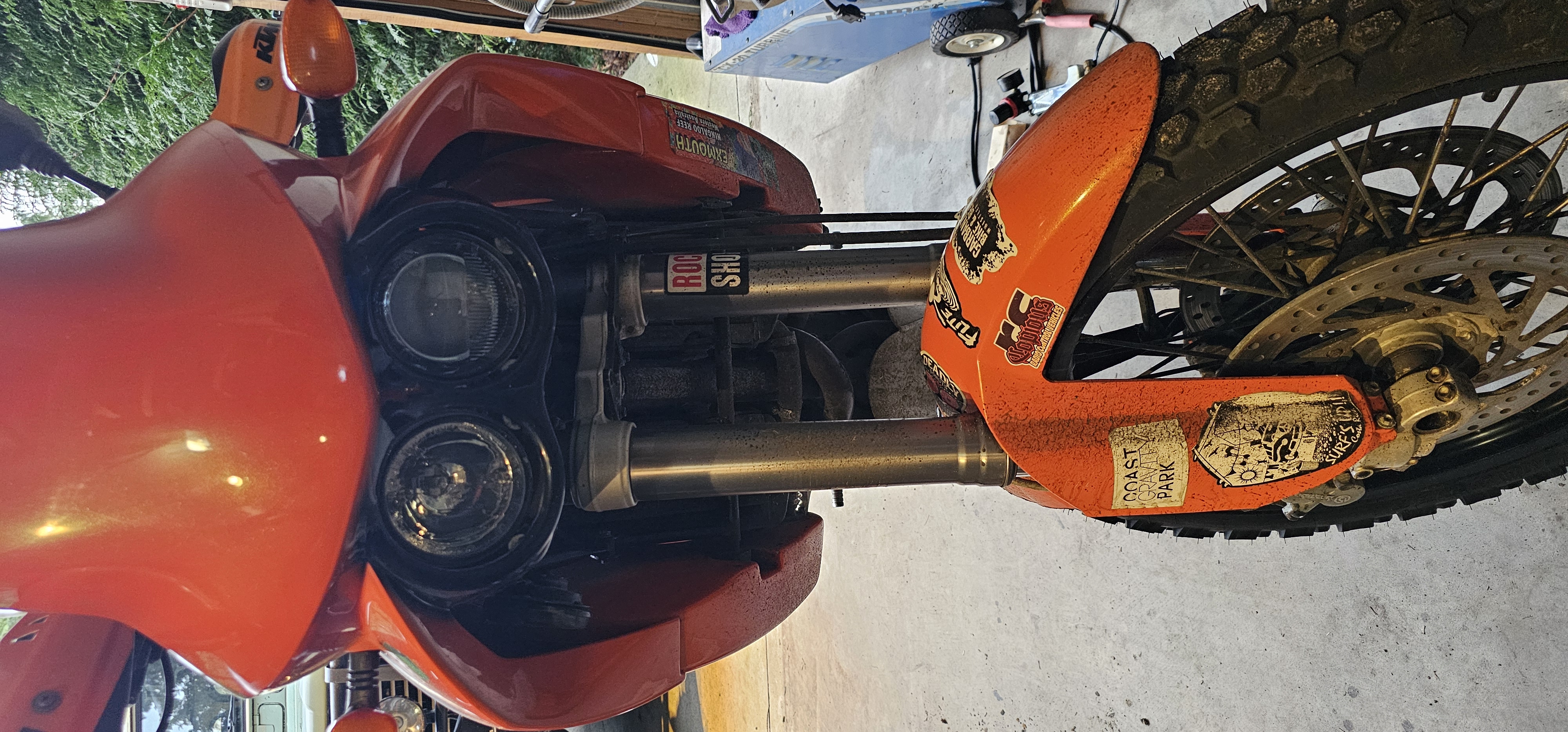
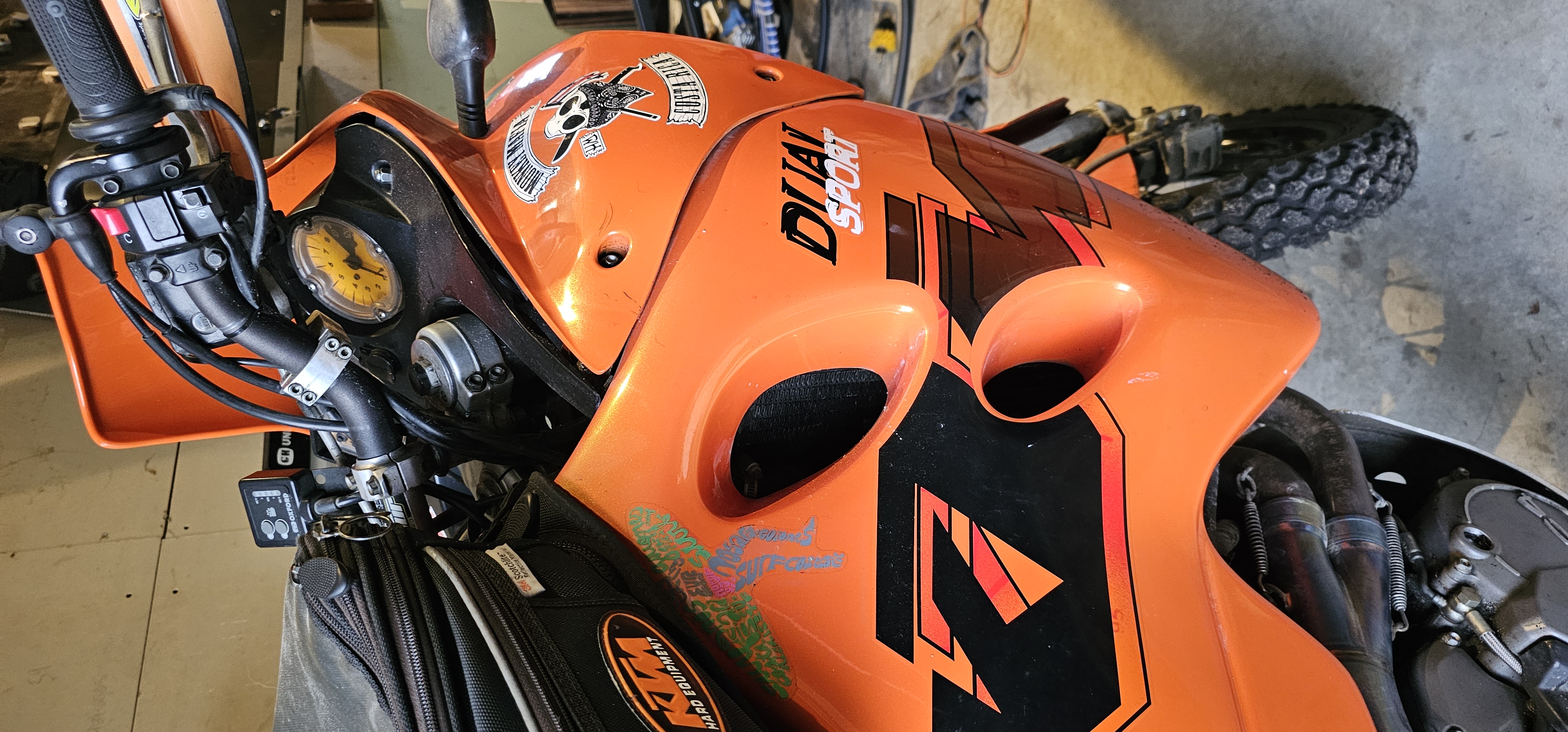
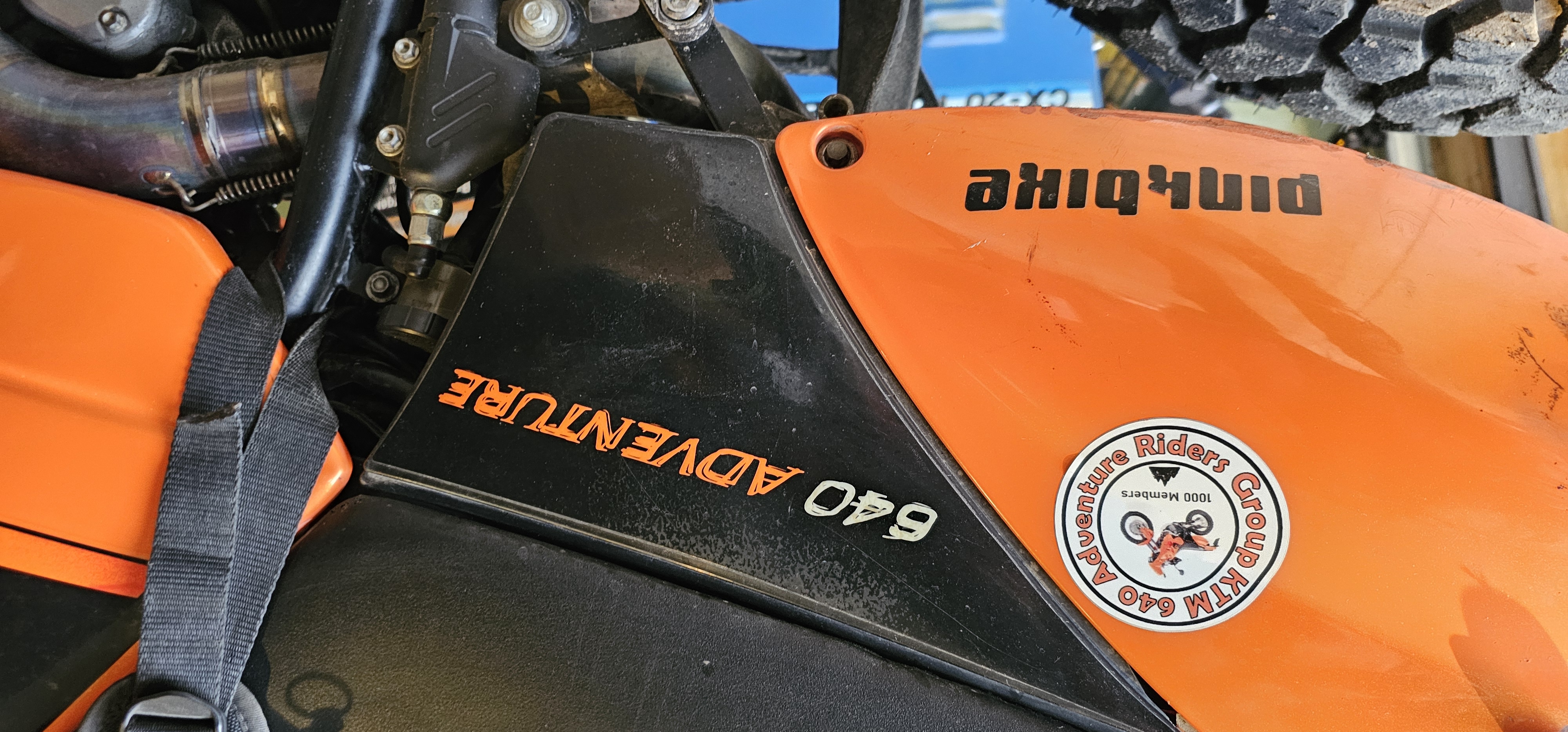
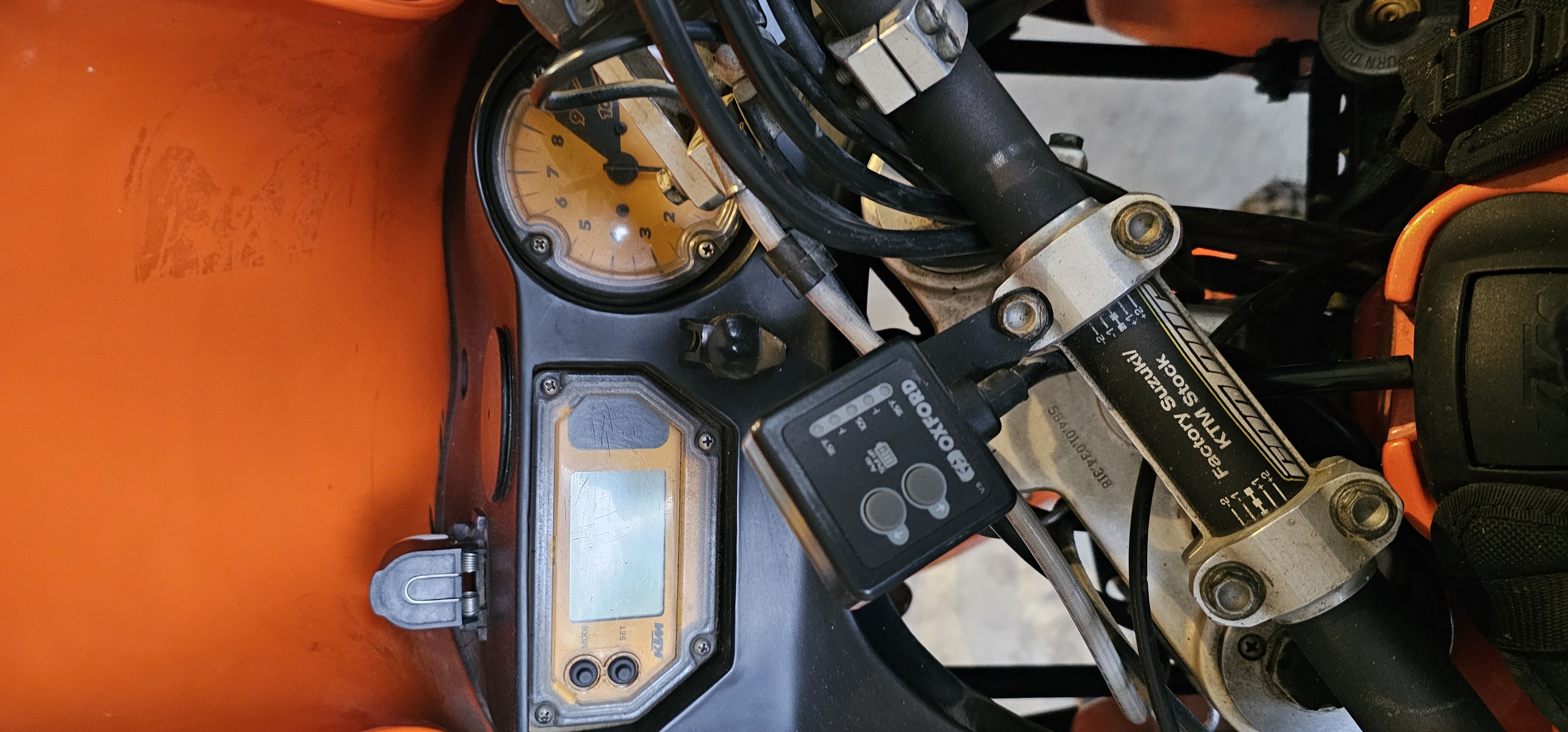
Roberts Creek, BC. The actual machine. Rock Shox forks, Coast Gravity Park sticker, Pinkbike decal, KTM 640 Adventure Riders Group badge, Oxford battery tender, Factory Suzuki/KTM Stock steering damper, yellow-faced tach. Mud still on the tyres.