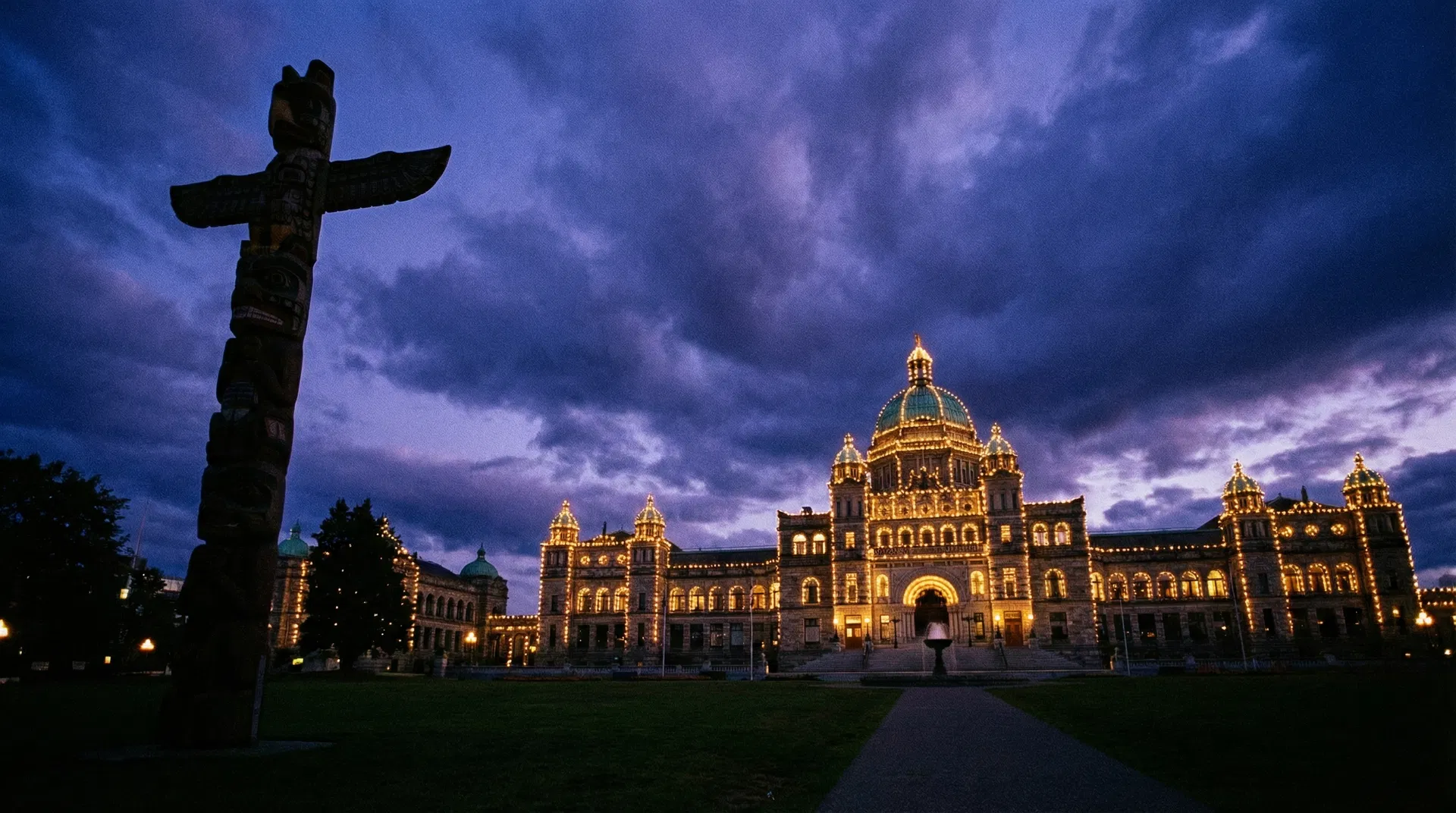
"Let us face it, we are all here to stay."
— Chief Justice Antonio Lamer, Supreme Court of Canada, Delgamuukw v. British Columbia, 1997
There is a question that sits underneath every property assessment, every municipal tax bill, every land transfer in British Columbia, and it has been sitting there, unresolved, for over 150 years. It is not a question invented by activists or academics. It was raised in the London Times in 1877, acknowledged by the Supreme Court of Canada in 1973, and confirmed again in 2025 by a judge appointed by Stephen Harper's Conservative government. The question is simple: when the Crown granted your land to a settler, did it actually own it to give?
In most of Canada, the answer is yes — the Crown made treaties with Indigenous peoples before settlement, purchasing or negotiating the land. In British Columbia, the answer is mostly no. Approximately 95 percent of BC was settled without a treaty. The legal term for this is "unceded territory." It is not rhetoric. It is a description of a legal obligation that has never been discharged.
This article will explain what that actually means — for your home, your taxes, your province, and your best days. It will not tell you what to think. It will tell you what the courts have said, what the history shows, and what the likely outcomes are. You can form your own view from there.
1. The Legal Foundation: What "Unceded" Actually Means
In 1763, King George III issued the Royal Proclamation — a foundational document of Canadian constitutional law that remains in force today. It established a clear principle: only the British Crown could acquire land from Indigenous peoples, and only by treaty. The land could not simply be taken. It had to be purchased or negotiated. The Proclamation was, in effect, an acknowledgement that Indigenous peoples held a legal interest in their land that had to be addressed before settlement could proceed lawfully.
In the prairies and much of Ontario, this process happened. The Numbered Treaties — eleven of them, signed between 1871 and 1921 — covered vast swaths of the country. In BC, it largely did not. James Douglas signed fourteen small "Douglas Treaties" on Vancouver Island between 1850 and 1854, covering modest areas near Victoria, Fort Rupert, and Nanaimo. Treaty 8 covers the northeast corner of the province. Everything else — the Lower Mainland, the Interior, the Coast, the North — was settled without a treaty.
When BC joined Confederation in 1871, the provincial government took the position that Aboriginal title had been extinguished by the Crown's assertion of sovereignty and that no further treaties were required. The federal government largely went along with this. The courts, over the following century, would disagree.
"Aboriginal title" is the legal term for the constitutionally protected collective right of Indigenous peoples to their traditional lands. It is recognized under Section 35 of the Constitution Act, 1982. It is not the same as fee simple — the standard form of private ownership. It is a distinct, pre-existing interest that the Crown's land grants did not, and legally could not, extinguish. The basic principle of property law applies: you cannot give away what you do not own.
2. The Truth Part: The Residential School System
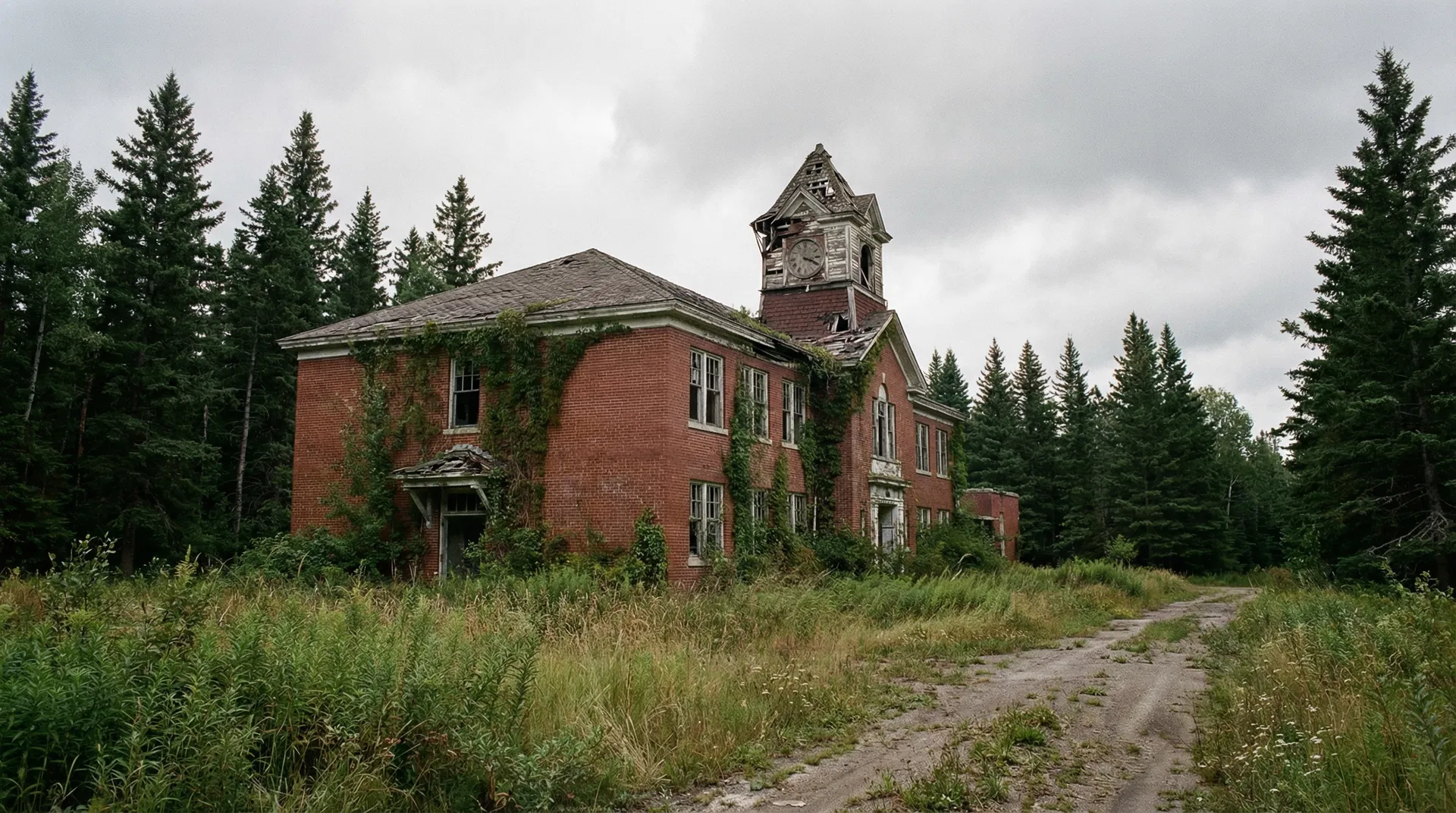
You cannot understand reconciliation without understanding what it is reconciling. The residential school system operated in Canada for more than 160 years. It was funded by the federal government and administered by Christian churches. Its stated purpose was to "civilize" Indigenous children by removing them from their families and cultures and assimilating them into Euro-Canadian society. The phrase attributed to Duncan Campbell Scott, Deputy Superintendent of Indian Affairs from 1913 to 1932, captures the intent: "to kill the Indian in the child."
Approximately 150,000 children passed through the system. Attendance became compulsory in 1894. Many schools were deliberately located far from Indigenous communities to limit contact with families. At the schools, children were forbidden to speak their languages, practice their religions, or maintain their cultural identities. Physical and sexual abuse are extensively documented. The last federally funded residential school — the Gordon Residential School in Saskatchewan — closed in 1997. Not 1897. 1997.
The Truth and Reconciliation Commission of Canada, which concluded its work in 2015, documented over 4,000 student deaths. The TRC estimates the true number exceeds 6,000. The vast majority of deaths were caused by tuberculosis and other infectious diseases in overcrowded, underfunded, and deliberately neglected conditions. The TRC's final report described the system as "cultural genocide." Pope Francis acknowledged it as genocide in 2022. The House of Commons passed a motion recognizing it as genocide in October 2022.
The TRC issued 94 Calls to Action — a roadmap for what reconciliation requires in practice. They cover education, child welfare, language revitalization, health, justice, and land. As of 2025, the federal government reports that more than 85 percent of the 76 Calls to Action that involve the federal government are completed or well underway. Independent trackers, such as the Beyond 94 project, counted only 12 fully completed as of 2021. The gap between "well underway" and "done" is, in many cases, the gap between a policy announcement and a lived reality.
3. What the Courts Have Been Saying for Fifty Years
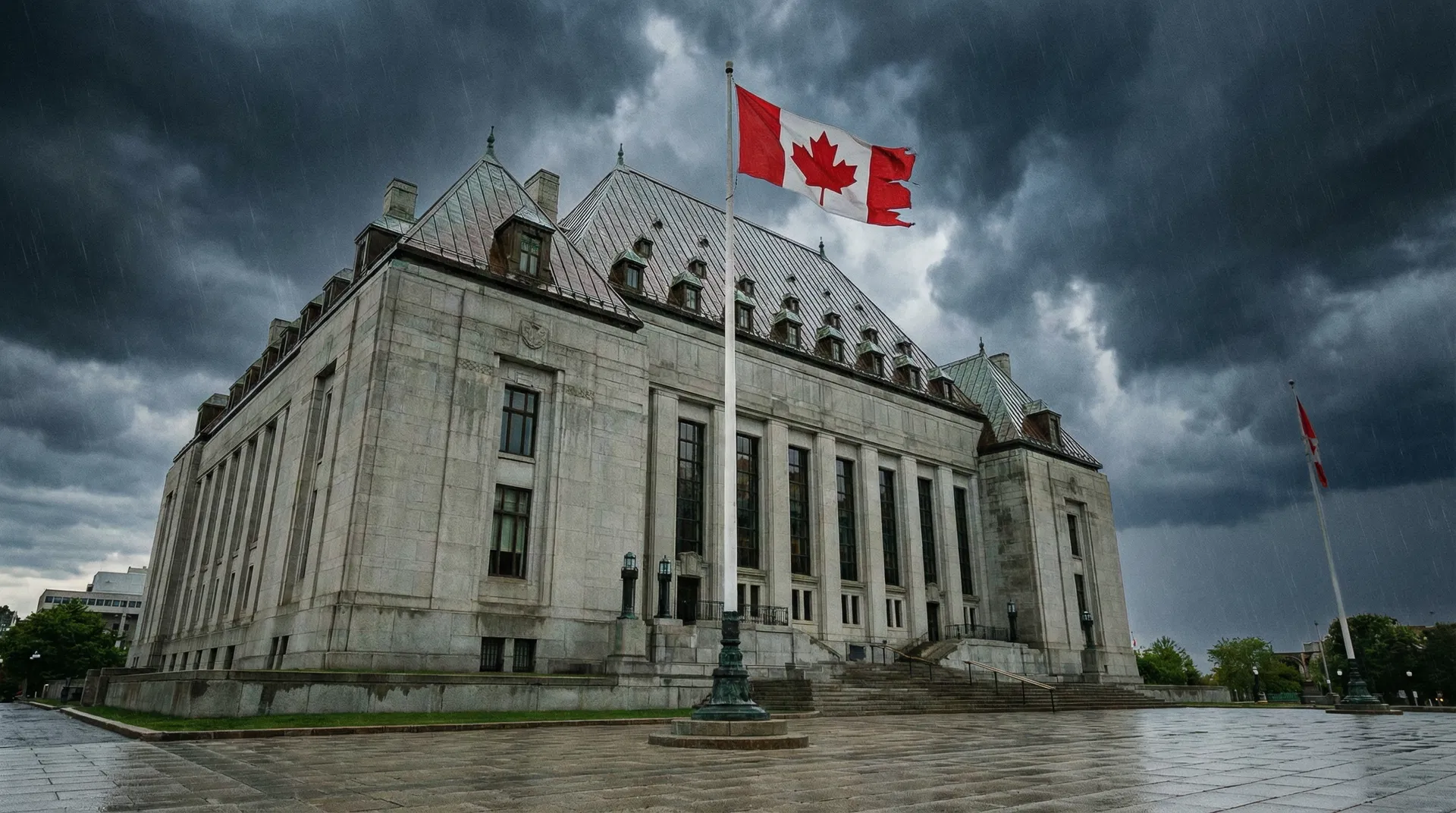
The legal trajectory is not ambiguous. It has been consistent for half a century, across governments of every political stripe, through judges appointed by Liberals and Conservatives alike.
| Case | Year | What It Established |
|---|---|---|
| Calder v. BC | 1973 | Aboriginal title exists in Canadian law and was not extinguished by the Crown's assertion of sovereignty. The Nisga'a case split 3-3-1 but shocked the federal government into creating the modern treaty process. |
| Delgamuukw v. BC | 1997 | Established the legal test for proving Aboriginal title: prior occupation, continuity, exclusivity. Confirmed that provincial land grants do NOT extinguish Aboriginal title. Ordered negotiation. |
| Haida Nation v. BC | 2004 | Established the Crown's duty to consult and accommodate Indigenous peoples even before title is proven. The strength of the claim and the seriousness of the impact determine the depth of consultation required. |
| Tsilhqot'in Nation v. BC | 2014 | First declaration of Aboriginal title over a specific territory in Canadian history: 1,750 km² in central BC. Confirmed that Aboriginal title includes the right to control, possess, use, and benefit economically from the land. |
| Cowichan Tribes v. Canada | 2025 | 513-day trial — the longest in Canadian history. BC Supreme Court declared Cowichan Aboriginal title over a historic village site in Richmond, including some privately owned land. Judge appointed by Conservative PM Stephen Harper. |
The Cowichan ruling generated significant alarm when it was handed down in 2025. BC Attorney General Niki Sharma said the decision "could have significant unintended consequences for fee simple private property rights in B.C." that must be reconsidered by a higher court. Adam Olsen, a former BC Green MLA and a member of the Tsartlip First Nation, offered a different framing: "This is not a 'woke' ruling from a radical bench. Justice Barbara M. Young was appointed in 2015 by Conservative Justice Minister Peter MacKay under Stephen Harper. The decision aligns with three decades of Supreme Court direction."
The alarm is understandable. The legal reality is more nuanced. The Cowichan ruling did not order private homeowners to vacate their properties. It declared that Aboriginal title can coexist with fee simple title on the same land, and directed the Crown — not private landowners — to negotiate how to reconcile the two. The court ordered the return of specific parcels owned by the federal government and the City of Richmond. Private homeowners who were not parties to the case were not affected.
4. What It Means for Your Home
The question most Canadians are actually asking is not an abstract legal one. It is: am I going to lose my house? The honest answer, based on the available evidence, is no — and the evidence for that comes not from government reassurances but from what Indigenous nations themselves have done when given the opportunity to resolve the question.
In April 2024, BC and the Haida Nation signed the Rising Tide Agreement — the first agreement in Canadian history recognizing Aboriginal title throughout an entire nation's terrestrial territory. The Haida Nation holds Aboriginal title to all of Haida Gwaii. And in that agreement, the Haida Nation explicitly agreed to honour all existing fee simple interests. Private property on Haida Gwaii is as secure as it has ever been. The Haida Nation's decision was described by the law firm Mandell Pinder as "a political, practical solution to the legal complexity created by colonization."
The Wolastoqey Nation in New Brunswick, which has a significant Aboriginal title claim, has publicly stated that it does not seek to dispossess homeowners or small businesses. The Policy Options Institute, reviewing the Cowichan ruling, wrote plainly: "The suggestion that homeowners could suddenly lose their deeds is unfounded. It's fearmongering that distracts from the real issue: the long-delayed duty of governments to reconcile Indigenous title with the land title system they created."
The legal liability for the unresolved land question sits with the Crown — the federal and provincial governments — not with private landowners. The remedies being sought and awarded are compensation from the Crown, return of Crown-owned land, revenue sharing from resource development on Crown land, and co-governance arrangements. The scenario in which a court orders a private homeowner to hand over their house to an Indigenous nation is not supported by any current case law or by the stated positions of any major Indigenous nation in Canada.
5. Federal vs. Provincial: Who Is Responsible for What
One reason this issue has remained unresolved for 150 years is the constitutional division of powers. Under Section 91(24) of the Constitution Act, 1867, the federal government has exclusive authority over "Indians and Lands reserved for Indians." Under Section 92, provinces have authority over property and civil rights, natural resources, and land management. The result is a structural tension: the federal government is responsible for Indigenous peoples, but the provinces control most of the land.
Modern treaties require both levels of government to sign. The BC Treaty Process, established in 1992, is tripartite: Canada, BC, and First Nations. After more than thirty years of negotiations, only four modern treaties have been completed — the Nisga'a Final Agreement (2000), the Tsawwassen First Nation Final Agreement (2009), the Maa-nulth First Nations Final Agreement (2011), and the Tla'amin Final Agreement (2016). There are more than 200 First Nations in BC. The pace of treaty-making is, by any measure, inadequate to the scale of the obligation.
The federal government adopted the United Nations Declaration on the Rights of Indigenous Peoples (UNDRIP) into Canadian law in 2021. BC was the first province to do so, in 2019. UNDRIP requires governments to obtain the Free, Prior and Informed Consent (FPIC) of Indigenous peoples before proceeding with projects that affect their lands and territories. The practical meaning of FPIC — and in particular whether it constitutes a veto — remains contested. The federal government says it does not. Many Indigenous advocates say it does. The courts have not yet definitively resolved the question.
What is clear is that the era of governments simply proceeding with resource development on unceded land without meaningful consultation is over. The duty to consult, established in Haida (2004), is now a legal requirement. The cost of ignoring it — in injunctions, litigation, and project delays — is substantial. The Trans Mountain Pipeline expansion, the Coastal GasLink project, and the Site C dam all generated significant legal challenges on this basis. The business case for resolving the land question through negotiation, rather than litigation, has never been stronger.
6. What Schools Were Teaching — and What They Left Out
For the past decade, Canadian schools have been teaching land acknowledgements — statements recognizing that a school, university, or government building sits on the traditional territory of a specific Indigenous nation. In BC, the standard acknowledgement at the University of British Columbia notes that UBC sits on the "unceded traditional territory of the Musqueam people." This statement is legally accurate. The Musqueam have never signed a treaty. Their Aboriginal title claim to the land on which UBC sits has never been extinguished.
In 2025, a group of UBC professors filed a lawsuit challenging land acknowledgements as political statements. Indigenous leaders condemned the lawsuit as "outdated and harmful." UBC's First Nations House of Learning responded directly: "Acknowledging unceded Indigenous territories and the findings of the Truth and Reconciliation Commission is not an act of charity or opinion — it's a recognition of fact and law."
The teachers who have been delivering land acknowledgements for years were, in the main, stating a legal fact. The criticism that they were pushing "rhetoric" is not well-founded when examined against the case law. What is a fair criticism is that the acknowledgements were often delivered without the legal and historical context that would make them meaningful. Saying "we are on unceded Musqueam territory" without explaining what "unceded" means in law, what the Royal Proclamation of 1763 requires, and what the courts have said about Aboriginal title is like teaching that the earth orbits the sun without explaining gravity. The fact is correct. The understanding it produces is incomplete.
The TRC's Call to Action #62 asks education systems to include Indigenous history — including the history of residential schools — as a mandatory part of the curriculum. Call to Action #64 asks for age-appropriate curriculum on residential schools. These are not requests to teach a political position. They are requests to teach what happened. A country that does not teach its children what it did to 150,000 Indigenous children over 160 years is not a country that has reckoned honestly with its history.
7. The Haida Model: What Practical Reconciliation Looks Like
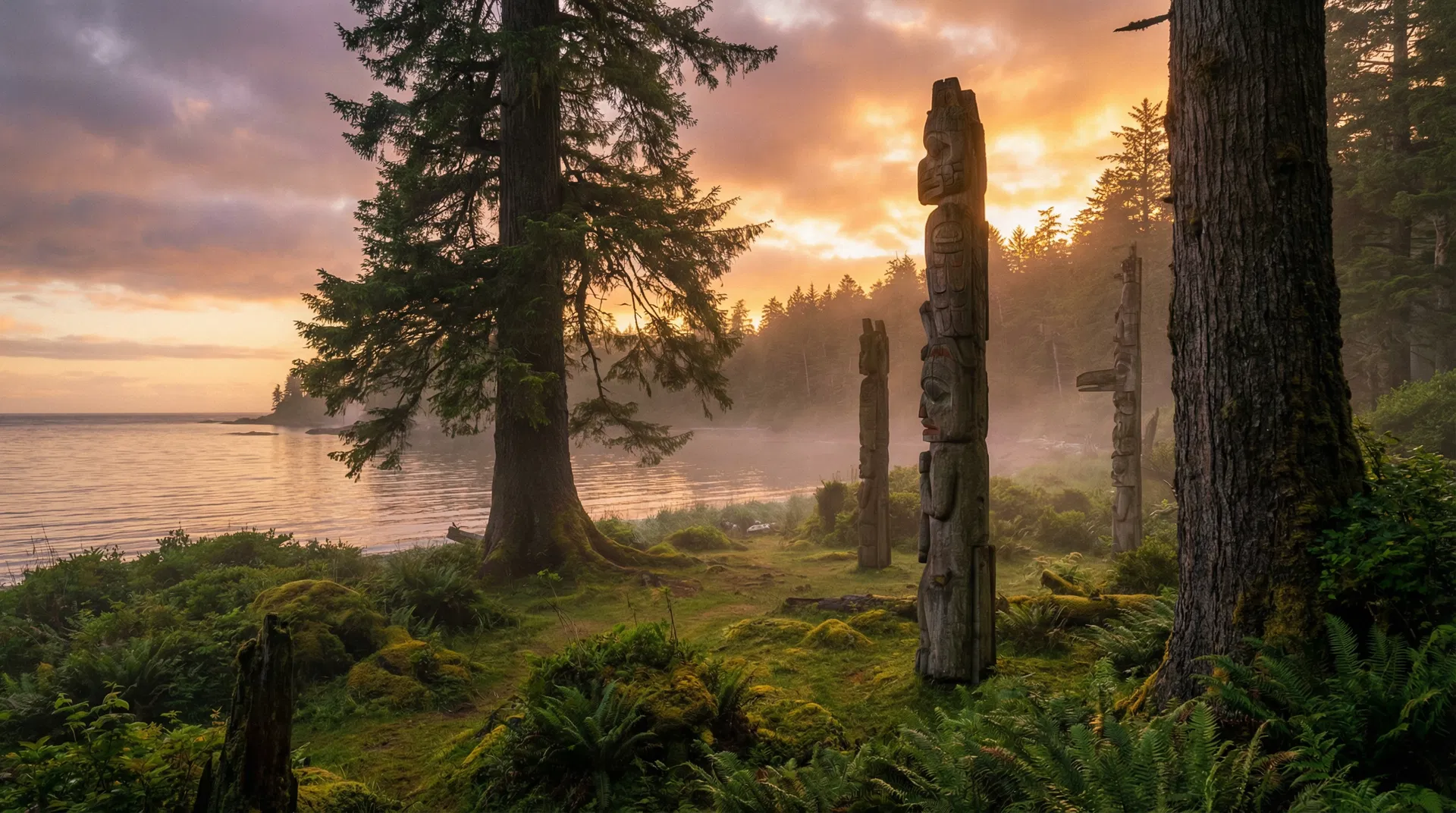
The Haida Title Lands Agreement of April 2024 is the most important development in Canadian land law in a generation. It is also the clearest available evidence of what reconciliation actually looks like when both sides negotiate in good faith.
Under the agreement, BC formally recognized the Haida Nation's Aboriginal title to all of Haida Gwaii. In exchange, the Haida Nation agreed to honour all existing fee simple interests — every private property owner on Haida Gwaii retains their title, their mortgage, their rights under provincial law. The agreement sets out a two-year transition period for reconciling Haida and provincial jurisdiction over forestry, fishing, and protected areas. Businesses, public services, local governments, and infrastructure continue to operate as usual. Over time, Haida law will play a greater role in the governance of Haida Gwaii.
The law firm Mandell Pinder, which has acted for Indigenous nations in BC for decades, described the agreement as "the first agreement under which Aboriginal title is recognized throughout an Indigenous nation's terrestrial territory" and noted that it represents "a major shift away from colonial practices." The Supreme Court of Canada had been urging governments to reach exactly this kind of negotiated agreement since the Delgamuukw decision in 1997. It took 27 years.
The Haida model answers the question that most Canadians are actually asking. It shows that recognizing Aboriginal title does not require dispossessing private homeowners. It requires the Crown to acknowledge a legal obligation it has been deferring for 150 years, and to negotiate a practical arrangement that gives Indigenous nations jurisdiction over their territories while protecting the interests of people who have built their lives there in good faith.
8. The Likely Outcomes
| Area | Likely Outcome | Timeframe |
|---|---|---|
| Private homeowners | Fee simple title protected. No mass dispossession. Crown — not private owners — bears the legal liability. | Already established in Haida model |
| Crown land & resources | Revenue sharing with First Nations becomes standard. FPIC requirements mean longer consultation timelines. Some projects blocked or modified. | Ongoing — already underway |
| BC Treaty Process | Slow but accelerating. Haida Agreement may create template for negotiated title recognition without full treaty process. | 10–30 years |
| Property taxes | No change anticipated for private landowners. Revenue sharing agreements affect Crown resource revenues, not municipal tax structures. | No near-term change |
| Resource development | Significant change already underway. Indigenous partnership and revenue sharing now standard for major projects. Some projects will face veto. | Ongoing |
| Federal-provincial tension | Will continue. Federal UNDRIP obligations vs. provincial land management authority will require Supreme Court resolution. | 5–15 years |
| Education | Residential school history and Aboriginal title will become standard curriculum. Land acknowledgements will be contextualized with legal and historical explanation. | 3–10 years |
The correspondent to the London Times who wrote in 1877 that "the practical difficulties in settling this question are so great that it has not been raised at present" also asked: "what guarantee can there be that the Indians themselves will not raise it at some future, perhaps not distant, time?" The answer, nearly 150 years later, is that there was no such guarantee. The question has been raised. The courts have answered it. The only remaining question is whether governments will negotiate the resolution or continue to litigate it — and every year of litigation makes the eventual settlement more expensive.
The BC Treaty Commission's own analysis puts the financial benefits of completing modern treaties at a net present value of nearly $2 billion. The cost of continued inaction — in litigation, injunctions, project delays, and the compounding liability of unresolved title claims — is growing. The business case for resolution has never been clearer.
GERALD'S TAKE
The Best Days Ahead Require an Honest Reckoning
I have spent a lot of time thinking about what makes a best day. It is usually something to do with being fully present in a place — knowing its history, understanding its character, feeling at home in it. You cannot be fully present in a place you do not understand. And you cannot understand British Columbia without understanding that it was built, in large part, on a legal foundation that the courts have been quietly dismantling for fifty years.
This is not a comfortable thing to sit with. It is not comfortable for anyone — not for the homeowner who bought their house in good faith, not for the Indigenous family whose grandparents were taken to a residential school and forbidden to speak their language, not for the government that has been deferring the legal bill for 150 years. Discomfort is not a reason to look away. It is usually a sign that you are looking at something real.
The good news — and there is genuine good news here — is that the Haida model exists. It shows that this can be resolved without dispossessing anyone, without economic chaos, without the apocalyptic outcomes that some commentators have predicted. It requires political will, good faith, and the willingness to acknowledge that a legal obligation deferred for 150 years does not disappear because it is inconvenient.
To have your best days ever in this country, you need to know where you live. Not just the postal code. The history. The law. The people who were here before the survey maps were drawn. That knowledge does not diminish your home. It deepens it.
KEY FACTS AT A GLANCE
~95%
of BC never ceded by treaty
150,000+
children in residential schools
6,000+
estimated student deaths
1997
last residential school closed
513 days
Cowichan trial — longest in Canadian history
4
modern BC treaties completed in 30 years
1,750 km²
Tsilhqot'in title declared (2014)
2024
Haida Gwaii title recognized — private property protected
94
TRC Calls to Action (2015)
JUST GERALD MERCH
UNDECEDED
The legal term. The pun. The statement. Wear it to the next town hall. Wear it to the treaty negotiation. Wear it anywhere people are pretending this question doesn't exist.
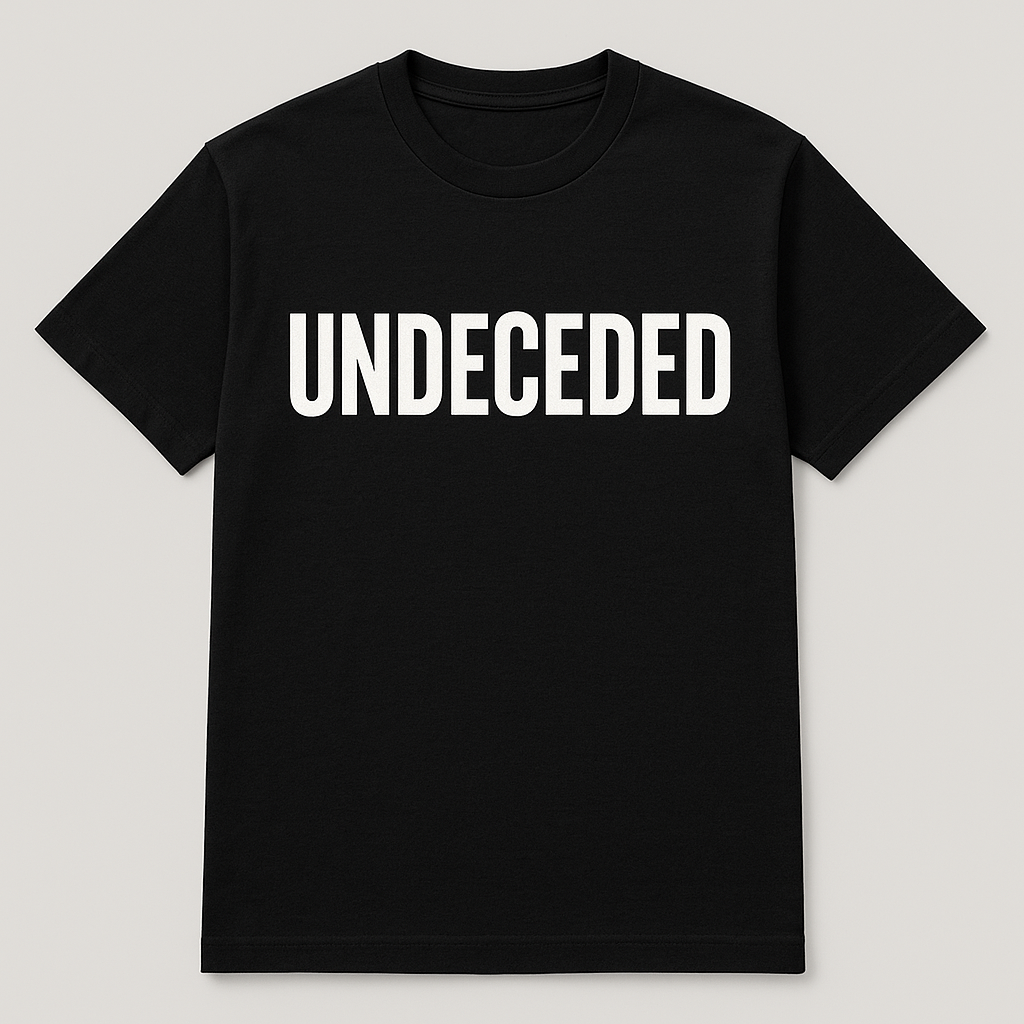

Orders fulfilled by Just Gerald Magazine. Email [email protected] with your size, shipping address, and quantity. We ship Canada-wide. Allow 5–10 business days.
SHARE THIS ARTICLE
This is the kind of article that changes how people think about where they live. Share it with someone who is ready to think clearly about this.