
THREE LIVES.
ONE VOICE.
He was a criminal barrister. Then a BAFTA-nominated screenwriter. Then a bestselling novelist who put Wales on the prestige television map. Matthew Hall has lived three complete careers — and walked away from each one not because he failed, but because he had something more important to say.
MONMOUTHSHIRE. THE PLACE THAT MADE HIM.
There is a stretch of country on the border of England and Wales — the Wye Valley, Monmouthshire, the Black Mountains in the distance — that does something particular to the people who grow up there. It is neither fully English nor fully Welsh. It is ancient and unhurried. The river bends through it like a sentence that takes its time. Matthew Hall grew up on that border, and he has never really left it.
Born in 1967, educated at Hereford Cathedral School and then Worcester College, Oxford, where he read Law, Hall has spent most of his adult life within reach of those hills. When London called — and it called loudly, twice — he went. When it was done, he came back. The border country is where he writes. It is where, he would tell you, the thinking gets done properly.
He is, in the best possible sense, a man of that landscape. Quiet. Precise. Deeply interested in the gap between what institutions claim to be and what they actually are. The Wye Valley teaches you that. Things look one way from the road. They look entirely different from the river.

MATTHEW HALL — AUTHOR & SCREENWRITER
"I was representing young kids. I remember one spirited 12-year-old who'd escaped from a secure care home and got as far as Amsterdam. He told me he'd starved himself until he could slip through the bars of the window. I ended up feeling quite paternal towards him and thinking that anything would be better than locking up a young teenager. It's brutal."
— THE INDEPENDENT, 2009
5 KING'S BENCH WALK.
THE SYSTEM WAS FAILING THEM.
Called to the Bar in 1990, Hall joined 5 King's Bench Walk in London and began his career as a criminal barrister. He was good at it. The analytical mind trained at Oxford, the ability to construct an argument, the instinct for what a jury needed to hear — these things came naturally. What did not come naturally was the gap between what the law was supposed to do and what it actually did.
He spent six years representing young offenders. Children, mostly. Boys from broken homes who had ended up in the system at ages when most of their peers were worrying about exams. The law, in theory, was there to protect them. In practice, it was there to process them. The distinction mattered enormously to Hall, and it wore on him in ways that a career built on professional detachment is not supposed to permit.
The 12-year-old who starved himself through the bars of a secure care home window to escape to Amsterdam was not an anomaly. He was the system in miniature. Spirited. Resourceful. Completely failed by every institution that was supposed to help him. Hall left the Bar in 1995. He had been there five years. He was not done with the law — the law was done with him.
KAVANAGH QC TO KEEPING FAITH.
60 HOURS OF PRIME-TIME DRAMA.
Hall's first writing credit was on Kavanagh QC, the ITV legal drama starring John Thaw. It was a natural fit — a former barrister writing about barristers, with the procedural authenticity that comes from having actually stood in those rooms. The work was good. More work followed. Within two years he had created and written Wing and a Prayer for the newly launched Channel 5, a legal series that earned a BAFTA nomination for best TV series in 1997.
Over the next decade he wrote episodes of Dalziel and Pascoe, Foyle's War, Holby City, The Scarlet Pimpernel. He co-created New Street Law for BBC One in 2006. He was prolific, reliable, and entirely anonymous — which is the condition of most television writers, however talented. The executives took the credit. The writers took the cheques. Hall grew increasingly frustrated with what television had become: a tabloid medium driven by youth demographics and executive interference, where serious drama about serious subjects was being systematically strangled.
New Street Law was supposed to be a street-level law show with something to say. It got "whittled away," as Hall put it, into a soap with romance. It was the last straw. He sat down to write a novel.
| SHOW | NETWORK | NOTE |
|---|---|---|
| Kavanagh QC | ITV | First TV credit |
| Wing and a Prayer | Channel 5 | Created & wrote — BAFTA nominated 1997 |
| Dalziel and Pascoe | BBC One | Episodes |
| Foyle's War | ITV | Episodes |
| Holby City | BBC One | Episodes |
| New Street Law | BBC One | Co-creator & lead writer, 2006/7 |
| Keeping Faith | BBC One / S4C | Created & wrote — BAFTA Cymru 2018 |
JENNY COOPER.
TWICE SHORTLISTED FOR THE GOLD DAGGER.
The Coroner was published by Pan Macmillan in 2009. It introduced Jenny Cooper, a lawyer in her early forties appointed as Severn Vale District Coroner — a woman with a dark past, a fierce intelligence, and an instinct for the cases that everyone else would prefer to close quietly. Hall had been carrying the character for years, originally as a man. At some point she became a woman, and the whole thing came alive.
The novel was shortlisted for the Crime Writers' Association Gold Dagger — the most prestigious prize in British crime fiction — in 2009. His fourth book, The Flight, was shortlisted again in 2012. Two shortlistings in four years is not an accident. It is a writer who understands exactly what he is doing.
Seven Jenny Cooper novels followed over eight years. Each one used the coroner's court — an institution with enormous theoretical powers that are almost never invoked — as a lens through which to examine what British society actually does with its most inconvenient deaths. Detention centres. Radicalisation. Military cover-ups. The books were not comfortable. They were not supposed to be.
In 2019, CBC in Canada adapted the series as Coroner, starring Serinda Swan. It ran for four seasons and drew a million viewers per episode in its first season. The man who had grown exasperated with British television executives found his work reaching audiences of a scale that British TV had never managed for him.
WALES. IN TWO LANGUAGES.
THREE BAFTA CYMRU WINS.
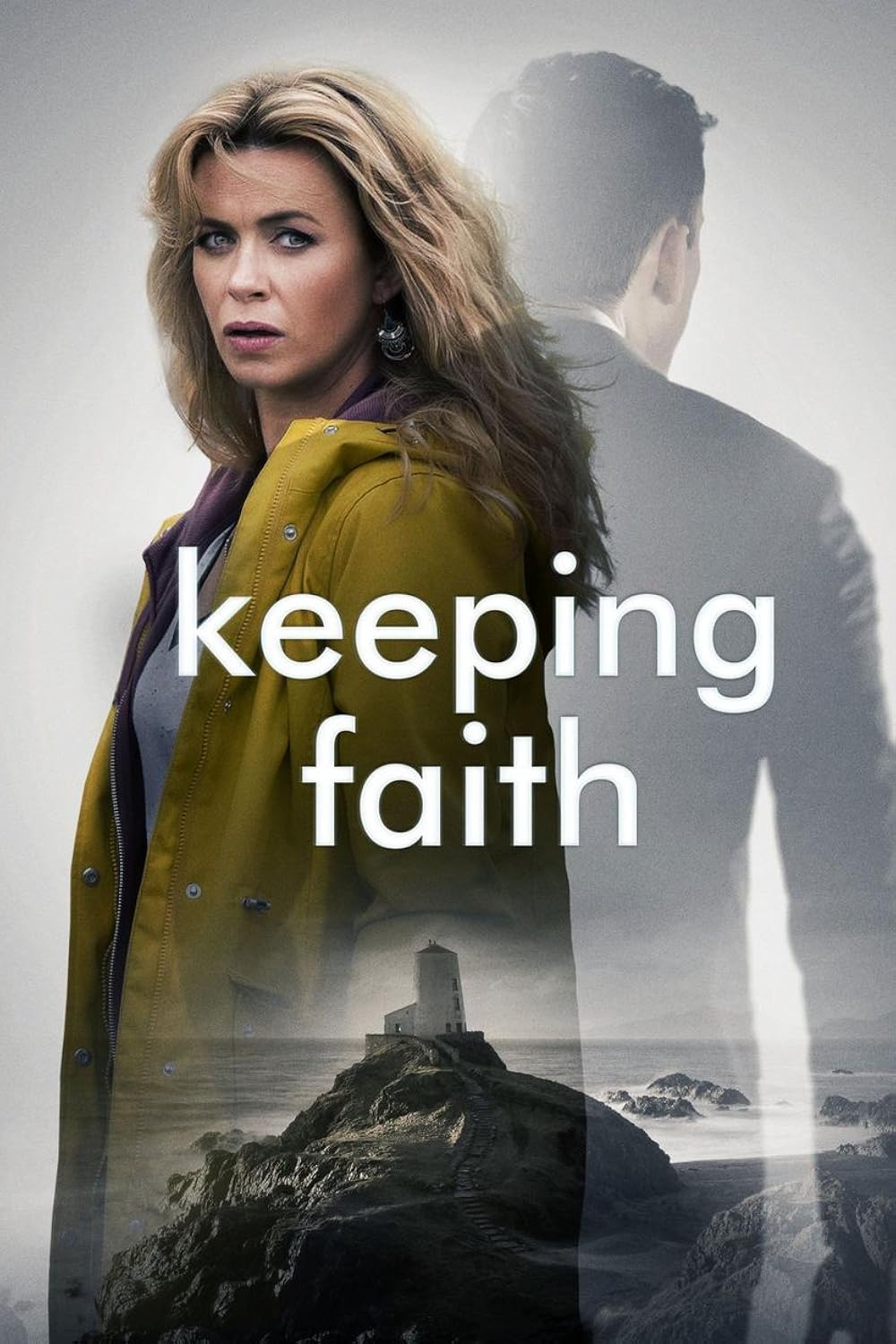
In 2017, Hall returned to television — but on his own terms. Keeping Faith, which he created and wrote for BBC Wales and S4C, was produced simultaneously in English and Welsh. The Welsh version, Un Bore Mercher (One Wednesday Morning), aired first on S4C in November 2017.
The series — a small-town Welsh lawyer whose husband goes missing, starring Eve Myles — became a cultural phenomenon in Wales and a slow-burn hit across the UK. At the 2018 BAFTA Cymru awards, it won three categories: Best Writer (Hall), Best Actress (Myles), and Best Original Music. Three seasons followed, running through 2021.
The man who had left television because it had become a tabloid medium had found, in Wales, a place where television still took its writers seriously.
AMATEUR BOXING.
COUNTRYSIDE CONSERVATION.
Hall is softly spoken and, by his own admission, would run a mile from a celebrity party. He is married to Patricia Carswell, a journalist and former lawyer — a pairing that suggests a household with a high tolerance for difficult questions and a low tolerance for easy answers.
His two passions outside writing are the conservation of the countryside and amateur boxing. The combination is not as incongruous as it sounds. Both require patience, precision, and a willingness to absorb punishment in pursuit of something that matters. Both are, in their different ways, about the gap between what you can control and what you cannot.
He runs a small production company, One Eyed Dog, with his stepfather GF Newman — the radical writer and producer responsible for Law and Order and The Nation's Health, two of the most challenging pieces of British television drama ever made. The influence is visible in everything Hall has written. The instinct is always to look at the institution and ask: what is it actually doing to the people inside it?
Three careers. Each one built on the previous. Each one abandoned not from failure but from a refusal to compromise on what the work was supposed to be. The barrister who found the system brutal. The screenwriter who found television frivolous. The novelist who found, in books and then in Wales, the freedom to say what he actually meant. That is a Best Day Ever. That is a life.

MONMOUTHSHIRE, WALES
"Matthew Hall lives on the border of England and Wales where he spent much of his childhood and most of his adult life."
— matthewhallbooks.com
The thing about Matthew Hall is that he is never doing what you think he is doing. The legal thriller is actually about institutional failure. The Welsh drama is actually about identity and belonging. The crime novel is actually about what a society chooses to investigate and what it chooses to ignore. He has spent thirty years asking the same question in different rooms. The question is: who is being failed, and why is nobody talking about it? That is a Best Days Ever. That is a life well spent.
— GERALD